

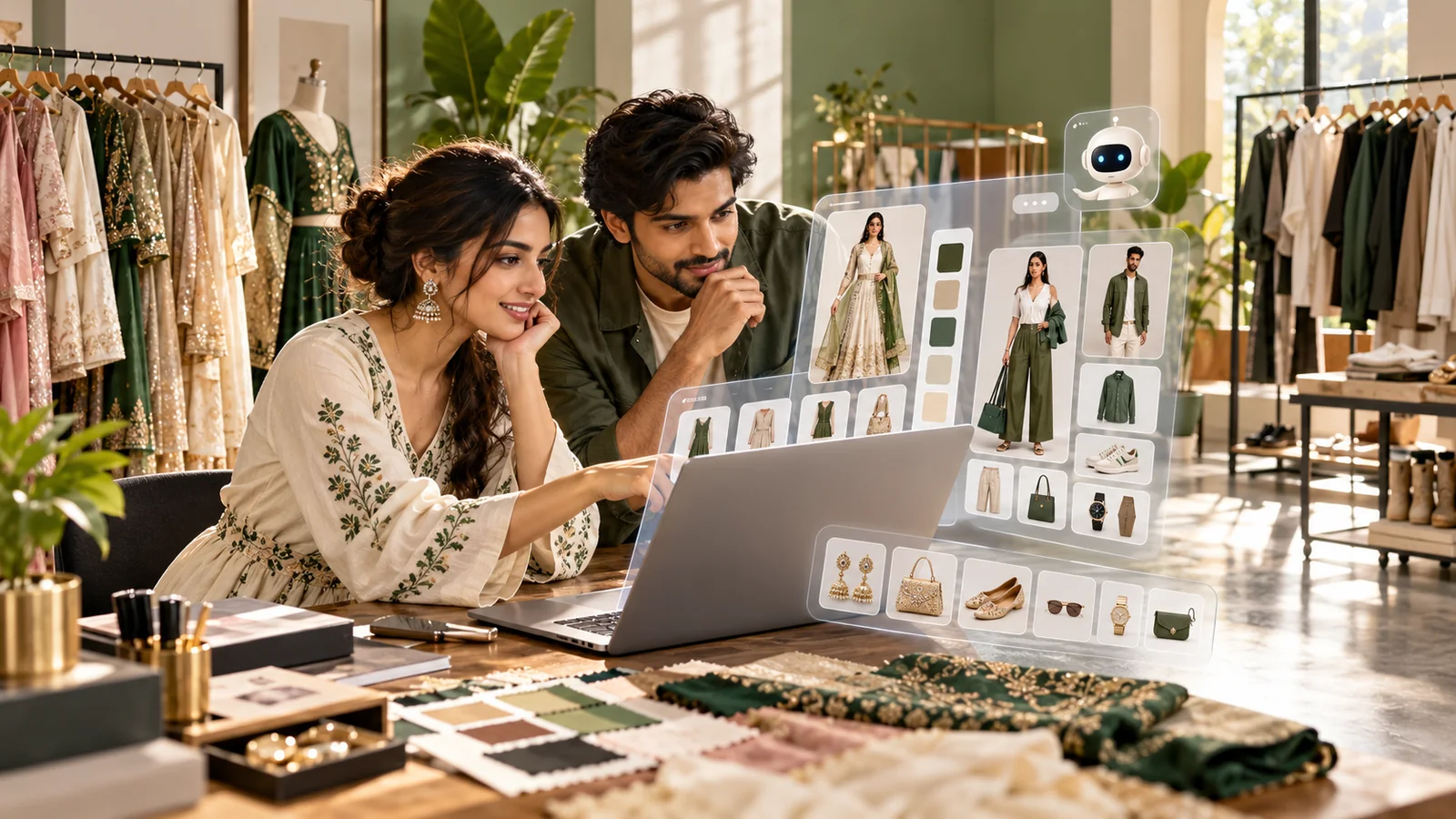
StyleBuddy for Fashion Brands: Virtual Try-On & Agentic Commerce Explained

- AI Fashion & Technology
- Fashion Business & Marketing
- Company
- Style Tips
- Fashion Brands
- Product Updates
- AI Styling
- Fashion for Brands (B2B)
- Shopping Assistant & Products
Imagine a shopper opening your product page with one question: “I love this kurta, but what would it look like on me—and what should I wear with it?” That's the moment we build for at StyleBuddy. We want fashion shopping to connect the product, the person and the occasion rather than leaving people to browse item after item without a clear outfit in mind.
The quick answer: StyleBuddy provides fashion brands with connected tools for AI virtual try-on, catalogue-aware styling, an AI-powered brand storefront and product discovery through StyleBuddy Marketplace. Our business experiences include StyleBuddy Virtual Try-On, Maya as the styling layer for participating brand storefronts, and Style Studio for AI-assisted fashion visuals. Each solves a different job, and brands can explore a specific tool rather than treating everything as one bundled feature. Explore StyleBuddy for Brands.
The fashion-shopping problem we're solving
Shoppers do not always arrive knowing exactly what product to search for. They think in terms of people and moments: a first-day-at-work outfit, a festive family dinner, a destination wedding, travel clothes that pack well or a smarter everyday wardrobe. Someone might love the fabric of a kurta but wonder whether the colour will work with their shoes. Someone else might need a complete outfit under a fixed budget.
When a storefront only offers category filters, the shopper has to do all the styling work alone. Our approach gives merchants different ways to make the shopping journey more helpful:
- Visualisation: help shoppers imagine a selected piece on themselves through AI virtual try-on.
- Conversation: let shoppers describe an occasion, preference or budget in natural language.
- Coordination: suggest relevant products that make sense together as outfits.
- Discovery: connect participating catalogues to fashion-focused browsing and styling journeys.
- Creative production: help brands prepare the visuals needed to show a collection clearly.
The practical goal is better information and a more useful shopping experience. We do not treat any promotional conversion or return-rate figure as a guaranteed result for every store. Outcomes depend on the product category, catalogue quality, customer experience and implementation.
1. StyleBuddy Virtual Try-On: help shoppers visualise clothes before buying
A photo of a garment on a model can show styling and details, but it doesn't answer a shopper's personal question: “Can I picture this look on me?” StyleBuddy Virtual Try-On adds a photo-based visualisation option to eligible fashion shopping experiences. A shopper selects a supported garment, provides a photo and receives an AI-generated outfit preview. The result helps explore a style direction before making a purchase decision.
Our virtual try-on offering is designed for apparel shopping, including Indian occasionwear and everyday categories. Brands should test their own garments before launch, particularly when a product involves intricate embroidery, saree draping, layered clothing, sheer fabric, unusual cuts or accessories that can be difficult to represent faithfully in generated imagery.
What a photo-based try-on does—and doesn't—tell you
A generated preview can help someone compare a silhouette, colour direction and overall outfit impression. It cannot reliably tell a shopper an exact size, fabric stretch, stitching quality or how a garment will move in real life. We encourage merchants to keep the real product photography, garment measurements, care details and returns policy readily available alongside the generated result.
For brands, this distinction is important: the benefit is a richer visual decision process, not the disappearance of size charts or fit-related uncertainty. A good try-on experience makes the shopper more informed without creating false confidence.
Can StyleBuddy add virtual try-on to a Shopify store?
Yes. We provide a StyleBuddy-for-Brands experience and a StyleBuddy Virtual Try-On app for Shopify merchants, enabling photo-based outfit previews directly in the shopping context. Brands should check the app's current compatibility, theme integration, permissions, usage limits and published terms before installation.
Our Shopify app listing currently describes a trial with 100 try-on credits for two weeks, with additional credit-based subscription tiers starting at US$14.99 per month. A different marketing page may describe an alternative introductory offer, so the actual plan shown during installation and billing is the one to confirm. We would rather have merchants check the live offer than rely on a copied number that might no longer be current.
Will virtual try-on work for sarees, kurtas and Indian D2C fashion?
Our product direction includes Indian fashion use cases such as kurtas, suit sets and occasionwear. To assess a specific category, test representative garments from your actual catalogue. A straight-cut kurta is a different visual problem from a pleated saree, a heavily embellished lehenga or a draped multi-piece set. Build your trial around the products customers ask about most—not just the easiest single image.
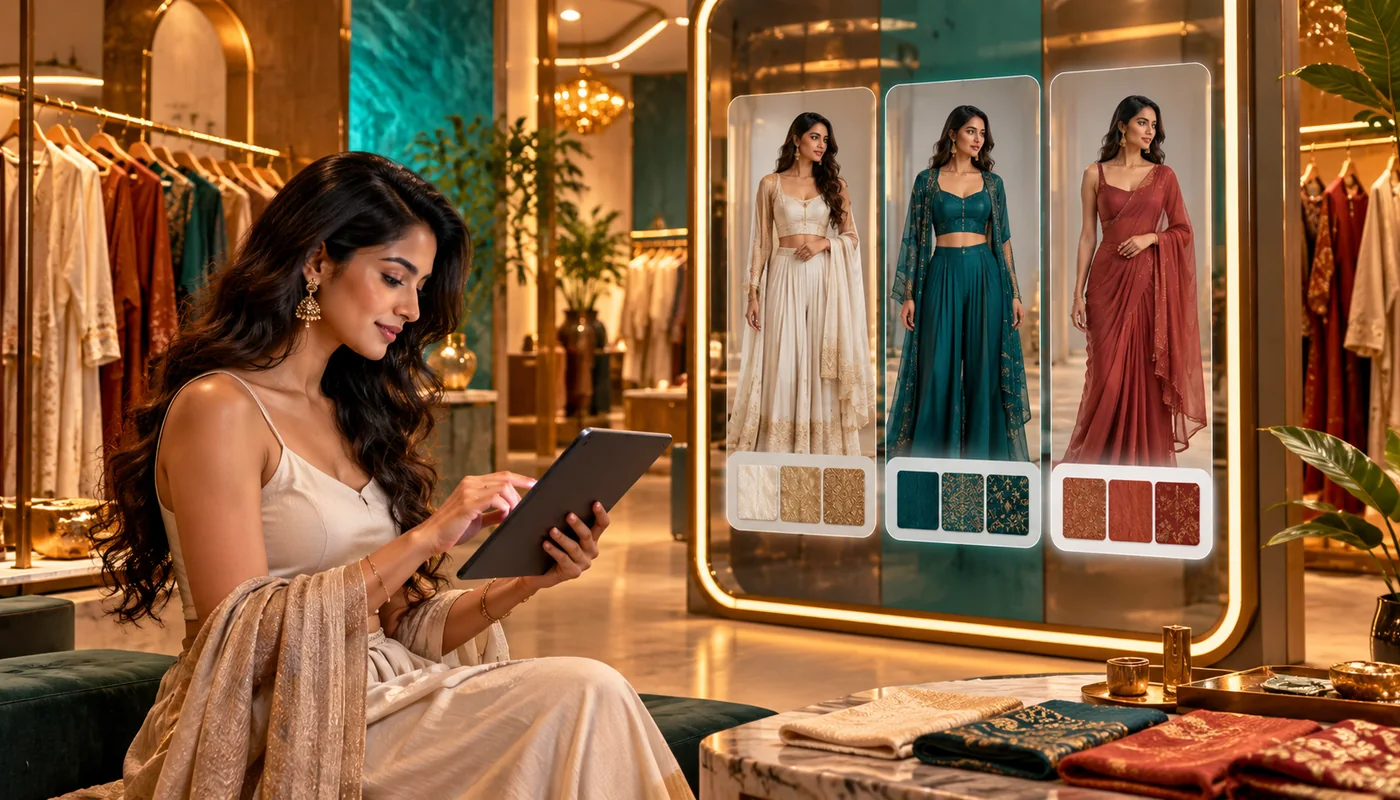
Virtual try-on can help shoppers explore a selected style visually, while the real garment details and size guide remain essential. Editorial concept image, not an actual app result.
2. Meet Maya: a styling conversation inside your brand's storefront
Maya is the AI styling experience behind our Agentic Storefront. Its role is different from a general fashion inspiration page. Maya is designed to help visitors discuss occasions, preferences and outfit needs in the context of a participating brand's own catalogue.
Instead of making a shopper translate “something understated for a summer engagement under ₹7,000” into a series of filters, a conversational experience can explore the brief and guide the person toward relevant products. The value comes from staying connected to real product information—what a garment is, how much it costs, whether the relevant size is available and which items can be worn together.
What is an agentic storefront?
For us, an agentic storefront means an AI-assisted shopping layer that helps move a customer from their intention to possible products and coordinated outfits. It goes beyond a static list of “similar items” by using the shopper's request, the retailer's assortment and the occasion to guide discovery. It should be able to clarify uncertainty rather than guess.
Maya is designed to sit alongside a brand's existing shopping experience. Current product materials describe an AI stylist chat widget, outfit coordination on product pages, wishlist and saved-outfit concepts, catalogue-aware responses and analytics.
Does agentic commerce mean checkout happens inside a chat?
Not necessarily. Guided discovery, outfit recommendations, saved looks, adding items to a bag and completing checkout are distinct capabilities. Some retail flows will lead to a standard product or checkout page, while additional features depend on integration readiness. We prefer to make the final handoff explicit: the shopper should know the seller, actual price, shipping conditions and return policy before paying.
3. StyleBuddy Marketplace: a place for brand discovery
A customer might know the mood they want—minimal workwear, modern ethnicwear, festive clothing, streetwear or comfortable resort pieces—without knowing the brand name. Through StyleBuddy Marketplace, our goal is to help eligible fashion labels become discoverable within shopping and styling journeys.
For participating brands, the journey begins with information we can understand: a live storefront, clear product categories, strong images, accurate prices and relevant inventory. When a shopper's styling brief matches products in a participating catalogue, discovery can become more useful than endlessly scrolling through isolated listings.
Our Shop by Brand and Shop All sections help consumers browse different aesthetics and clothing categories. We don't promise that every brand appearing in the directory is based in India, that every product has a live brand chatbot, or that all orders are completed inside StyleBuddy. The current retailer information and merchant checkout experience remain important.
How do brands start a Marketplace onboarding journey?
Our Marketplace page provides a website-based entry point. Businesses can begin by entering their fashion-store URL, previewing the available connection flow and creating an account as guided. The actual listing experience, product ingestion method, approval rules and commercial terms depend on the business and its integration. If you have a complex catalogue or don't use a supported store setup, contact the StyleBuddy team about your options rather than assuming a one-click import for every website.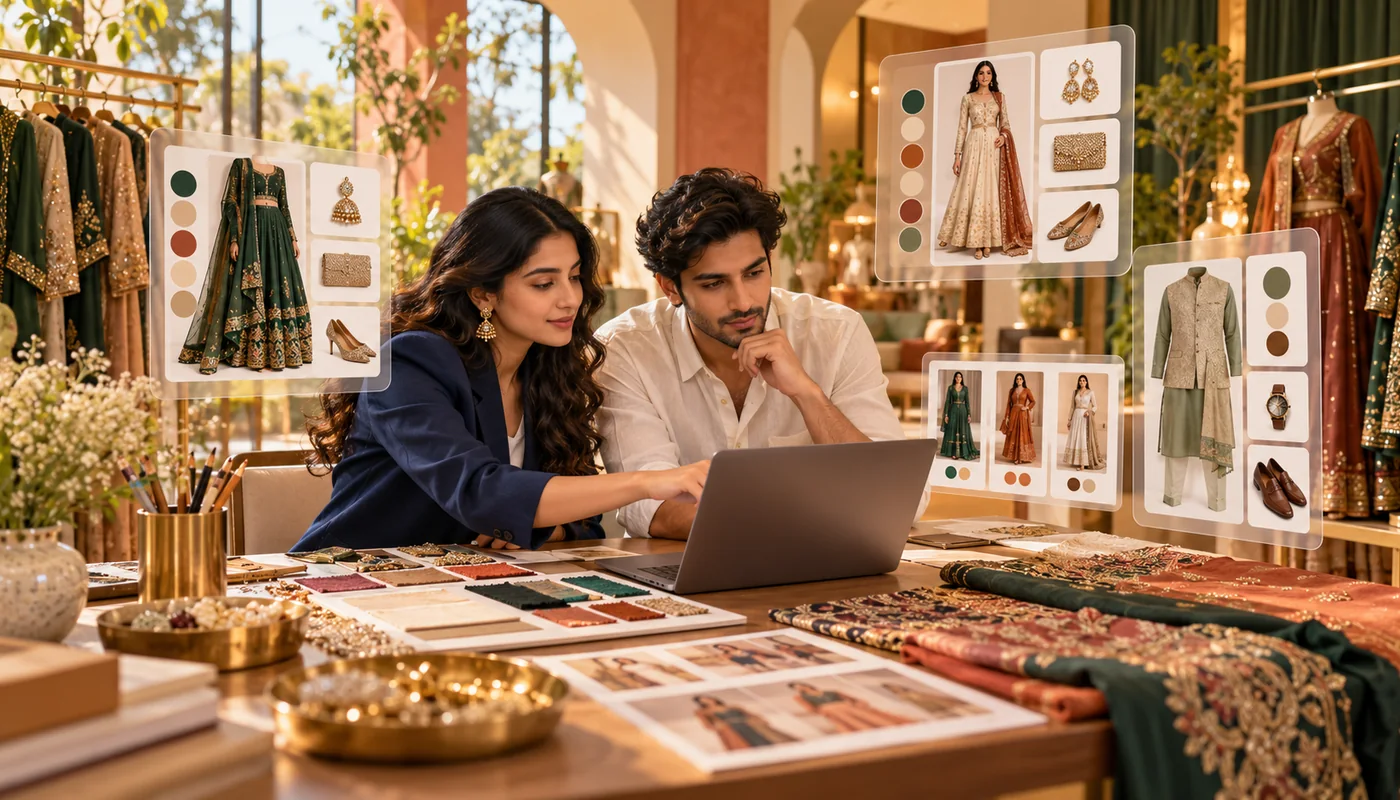
Catalogue-aware styling connects occasion, budget, garments and accessories in one creative discovery experience. Editorial illustration.
4. Style Studio: creative assets for modern fashion brands
A shopper also needs clear, appealing product visuals. Style Studio is our AI-powered creative environment for exploring fashion imagery, model-led content and new visual treatments of existing product assets. Its role is different from an AI stylist: it helps the brand show products.
Brands may use AI-supported model and background concepts, style variations and product visual treatments as part of a wider content workflow. These can be especially useful when a team needs to communicate multiple creative directions before organising final approved assets.
The product-fidelity rule we recommend
Treat generated fashion images as creative material requiring review. Check actual colour, fabric texture, trims, embroidery, prints, logos, seams and silhouette against the real product. An appealing generated outfit isn't permission to alter a garment's physical details in a shopping image. Rights, model representations, consent and advertising claims also deserve a human approval step.
Used carefully, AI imagery can help teams explore concepts and visual merchandising. It should not replace the accuracy customers need to make purchase decisions.
5. How fashion brands can prepare for intelligent shopping
The strongest implementation starts before anyone adds an AI widget. A styling assistant needs product information it can trust. Here's the store-readiness process we recommend:
- Clean the catalogue. Make sure each item has a specific title, category, description, price and product link.
- Add useful styling attributes. Include fabric, fit, length, colour, neckline, sleeve style, occasion, care instructions and whether an item is sold as a set.
- Keep inventory current. A recommendation shouldn't quietly direct someone to a sold-out variant.
- Define the shopper questions. Write 20 real prompts from your category: “What should I wear to a mehendi?” or “Which jacket works with these trousers?”
- Trial your virtual try-on. Test representative products, different photo qualities and varied garment constructions. Record where visual details are imperfect.
- Plan the buying handoff. Make product links, delivery policies, size charts and checkout obvious.
- Review privacy and permissions. Explain why a photo or account field is requested, where the shopper can find the relevant policy and which processing is necessary.
- Measure before claiming success. Compare comparable traffic and product groups rather than treating a before-and-after anecdote as a universal result.
How to think about conversion and returns without exaggeration
A better shopping experience may help customers feel more confident, but that is not the same as proving a numerical increase in purchases or a reduction in returns. If you want a reliable outcome, decide on the measurement before launch: engagement with try-on, assisted product views, add-to-bag events, purchase rate, returns attributable to sizing or appearance, and customer feedback.
Compare similar collections over an adequate time window. Keep promotion changes, inventory fluctuations and seasonality in mind. If the sample is small or the data is noisy, describe the result as preliminary. We want our tools judged on useful retailer outcomes—not a percentage repeated without context.
Is StyleBuddy affordable for small Indian D2C brands?
The right test is whether the expected use fits the actual plan. Our Shopify try-on listing includes a credit-based trial and paid tiers beginning at US$14.99 per month at the time of writing. A smaller brand can start with one collection and learn from usage before scaling. For Maya, Marketplace and other business solutions, ask about the specific scope, availability and commercial terms instead of assuming a universal monthly price applies to every product.
6. How shoppers experience all this through StyleBuddy
These tools are designed around complementary moments. A shopper may start in our consumer app with Maya, develop a sense of their preferred style and discover ideas for work, travel or a wedding. They may then browse participating fashion brands or look for a suitable product in Shop All. A participating merchant may offer a catalogue-aware assistant through Maya or photo-based virtual try-on on an eligible product page.
The connection is simple: personal styling explains the look; product discovery finds candidates; virtual try-on offers a visual preview; and the retailer completes the sale under its actual policies. Not every partner uses every component, and we think that choice is healthy. Brands should solve the customer's most important problem first.
Where does StyleBuddy fit within India's AI fashion-tech ecosystem?
We're building where styling, commerce and fashion creative technology meet. That's why StyleBuddy belongs in conversations about Indian AI fashion innovation, virtual try-on, fashion shopping assistants and AI tools for brands. But we don't need to claim an unsupported number-one ranking, invent a “top ten” leaderboard or describe unrelated companies to explain our own work. Our products and the customer problems they address are the clearest introduction to StyleBuddy.
Frequently asked questions for fashion brands and shoppers
1. What is the best AI virtual try-on approach for a fashion brand?
The best fit depends on your garments and customers. If shoppers need a photo-based visual preview alongside your existing product information, explore StyleBuddy Virtual Try-On and test actual SKUs before rollout.
2. Does StyleBuddy offer AI virtual try-on for Indian fashion brands?
Yes. Our brand offering includes photo-based garment visualisation, and we recommend category-specific validation for kurtas, sarees, occasionwear and Westernwear.
3. Can StyleBuddy Virtual Try-On be used with Shopify?
Yes. We offer an app for eligible Shopify storefronts. Check the live compatibility, theme setup and pricing during installation.
4. Is there a trial or an affordable starting plan?
Our Shopify app currently lists a time-limited credit trial and paid plans starting at US$14.99 per month. Confirm the actual credit allowance, current charges and currency at signup.
5. Does one try-on use one credit?
The current Shopify app pricing describes one credit per try-on. Verify your installed plan's rules before forecasting monthly usage.
6. Can shoppers try an embroidered kurta, saree or lehenga?
These are relevant visual try-on use cases, but generated accuracy varies by item. We recommend testing draping, embroidery, layers and fit-sensitive garments individually.
7. Does virtual try-on replace our size chart?
No. Keep measurements, fabric information, care notes, real product imagery and return policies accessible.
8. Will virtual try-on reduce our returns?
It may influence shopper confidence, but we do not promise a specific return reduction. Measure your own return reasons and performance in a controlled way.
9. Does StyleBuddy have an AI stylist for fashion brands?
Yes. Maya, our Agentic Storefront styling layer, is built for guided discovery and coordinated outfit suggestions in a participating brand's own shopping experience.
10. What is an agentic storefront in fashion?
It's a shopping experience that uses conversational intent and product-catalogue context to help a shopper find suitable items and complete outfit ideas rather than navigating only static category filters.
11. Can Maya remember preferences and create saved looks?
Our product describes shopper preferences, saved-look concepts and related styling functions. Specific memory and wishlist behaviour depends on the features enabled for the merchant.
12. Can a shopper buy directly from a saved outfit in Maya?
Some purchase-related saved-outfit functionality is marked coming soon. Confirm the available shopping handoff and checkout integration for your deployment.
13. Do we have to replace our existing checkout to use Maya?
Our product is positioned as a layer on a merchant's existing storefront. Confirm implementation and checkout details for your particular setup before deployment.
14. Can a small fashion label appear in StyleBuddy Marketplace?
Our Marketplace provides an onboarding route for participating brands. Eligibility, product setup, approvals and availability are reviewed through the current onboarding process.
15. Are all brands in StyleBuddy's directory Indian, and do they all have AI chat?
The directory covers participating labels and changing collections. We don't guarantee that every listed brand has the same origin or has enabled a brand-specific AI stylist.
16. Can shoppers discover Indian fashion brands with styling help?
Yes. They can explore our brand directory, Shop All and consumer styling experience. Specific product recommendations and checkout routes depend on the live participating catalogue.
17. What does Style Studio do for a fashion brand?
Style Studio supports AI-assisted fashion imagery and creative experimentation, including on-model concepts and visual variations. Brands should verify product fidelity before publishing.
18. Can StyleBuddy help with fashion campaign photographs and product visuals?
Yes. Our Style Studio and creative-product pages describe workflows for fashion content, model-led concepts and product-photo treatments. Final outputs still need merchant review and rights checks.
19. Is StyleBuddy an Indian AI fashion technology company?
StyleBuddy is an India-oriented fashion and styling business with consumer styling and fashion-brand technology offerings. Our About page introduces our company story and founder, Siddharth Pandit.
20. How do we evaluate StyleBuddy alongside a list of AI fashion tools?
Start with the need: personal styling, virtual garment visualisation, an on-site brand assistant, catalogue discovery or creative images. We describe our capabilities so you can evaluate StyleBuddy on the relevant job without relying on unsupported rankings.
21. Can StyleBuddy act as an AI shopping assistant for clothing in India?
Our consumer app and brand tools support outfit guidance and fashion-product discovery. Actual selection, retailer participation and purchasing actions vary by the live experience.
22. Can we integrate all StyleBuddy brand experiences together?
Our brand offering includes complementary tools, but scope and availability are integration-specific. Start with the highest-priority use case and ask our team about connecting additional tools.
23. What should we send StyleBuddy before an onboarding conversation?
Bring your website URL, platform, product categories, approximate SKU count, target markets, top shopper questions, sample products, image formats and goals for try-on or assisted shopping. A clear brief makes the first evaluation far more useful.
24. How does StyleBuddy handle shopper photos and privacy?
Photo-handling terms depend on the feature and integration. Review the applicable current policy and store permissions rather than assuming every AI workflow stores or deletes images in the same way.
25. Can AI fashion tools guarantee more conversions or eliminate cart abandonment?
No. We assess the experience with actual store metrics, careful testing and customer feedback rather than promising one fixed result for every retailer.
Let us build a more useful shopping journey
Whether you're introducing virtual try-on, making a catalogue easier to shop, exploring conversational styling or preparing better fashion imagery, start with the problem your shoppers actually have. We'll help you decide which StyleBuddy experience belongs in that moment. Explore StyleBuddy for Brands, see our Agentic Storefront, discover StyleBuddy Marketplace or explore Style Studio.
Related reading
- From “What Do I Wear?” to “This Is So Me”: How Style Studio Helps You Build Your Personal Style
- StyleBuddy: Your Complete Guide to AI Styling, Personal Stylists & Indian Fashion
- How to Find an Outfit for Any Occasion on StyleBuddy
- The End of ‘Dress Codes’: How Modern Professionals Are Redefining Workwear