

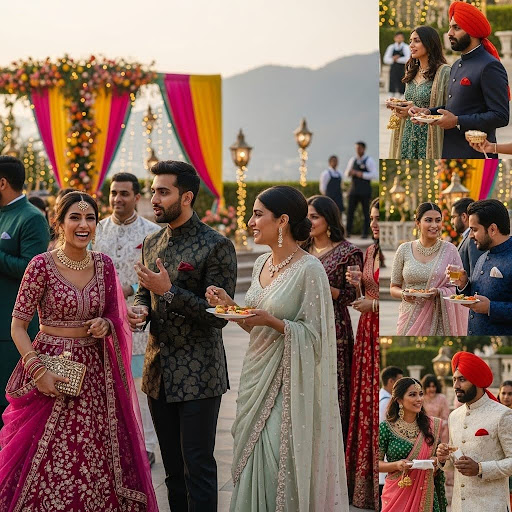
Wedding Guest Etiquette: What to Wear to a 3-Day Indian Destination Wedding

- #wedding-guest
- #destination-wedding
Attending a 3-day Indian destination wedding is as much about understanding the celebration as it is about dressing for it. This guide walks you through each event—from Mehendi to Reception—helping you choose outfits that align with the mood, setting, and cultural aspects while maintaining your personal style.
With a stylist-led approach, the focus shifts from overpacking to intentional dressing. By balancing tradition with modern elegance, and comfort with sophistication, wedding guests can create looks that feel effortless, appropriate, and memorable across every function.
There’s a distinct moment when you receive an invite to a 3-day Indian destination wedding—it feels less like an event and more like an experience waiting to unfold. A celebration set against a beach, a palace, or the hills, filled with rituals, music, and long conversations that stretch into the night.
But alongside the excitement comes the inevitable question: What do I wear to everything without overdoing—or underdoing—it?
As a stylist, I’ve always believed that dressing for a wedding like this is less about having the most outfits and more about understanding the rhythm of the celebration. Each event carries its own energy, and your wardrobe should move with it—effortlessly, respectfully, and with intention.
The Philosophy of Dressing as a Wedding Guest
Before diving into outfits, it’s important to understand your role. You are not the centerpiece—you are part of the atmosphere. Your style should enhance the celebration, not compete with it.
The goal is simple: look polished, feel comfortable, and remain contextually appropriate across all three days.
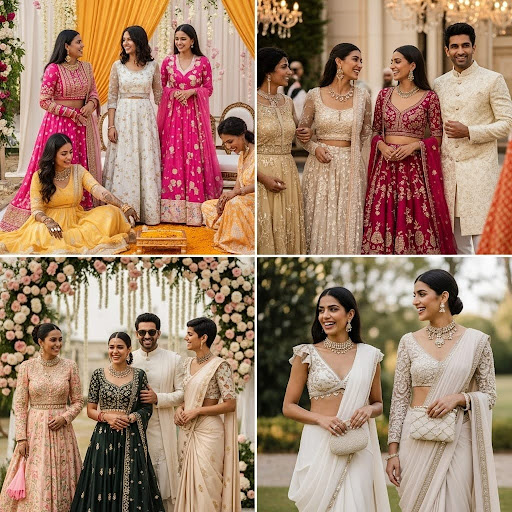
Day 1: Arrival, Mehendi & Haldi — Ease Meets Celebration
The first day always feels light. There’s laughter, introductions, and a sense of ease as guests settle into the destination. The Mehendi and Haldi functions are vibrant, intimate, and often held under the sun.
This is where your wardrobe should breathe.
What Works:
Flowy lehengas that move with you Relaxed sharara or gharara sets Soft sarees that don’t require constant adjustment Indo-western silhouettes with minimal structure
Fabric & Feel:
Think cottons, chiffons, organza—fabrics that allow movement and don’t trap heat.
Color Language:
Yellows, fresh greens, powder blues, soft pinks—tones that echo the joy of the day.
A Stylist’s Observation: The most common mistake here is overdressing. Heavy embroidery, dark colors, or stiff fabrics can feel out of place. These are moments where you’ll sit on the floor, lean into conversations, maybe even get a little color on you—your outfit should allow that freedom.
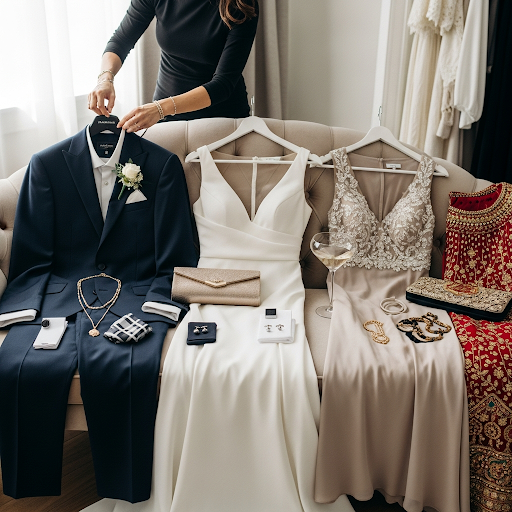
Day 2: Sangeet & Cocktail Night — The Shift to Glamour
By the second day, the energy transforms. The sun sets, the lights come on, and the celebration takes on a more glamorous tone. This is where fashion becomes more expressive.
What Works:
Statement lehengas with controlled embellishment Sleek sarees styled with a contemporary blouse Evening gowns that hold structure Indo-western pieces with strong tailoring
Fabrics & Finishes:
Velvet, satin, sequins, metallic textures—this is where you can introduce shine and depth.
Color Direction:
Jewel tones, black, deep wine, metallic golds and silvers.
Styling Perspective:
This is your moment to stand out—but intelligently. Choose one hero element. If your outfit is heavily embellished, keep jewelry minimal. If your silhouette is simple, let your accessories or makeup carry the look.
Movement Matters:
You will dance, walk, and socialize for hours. If your outfit restricts you, it will show—not just in movement, but in how you carry yourself.
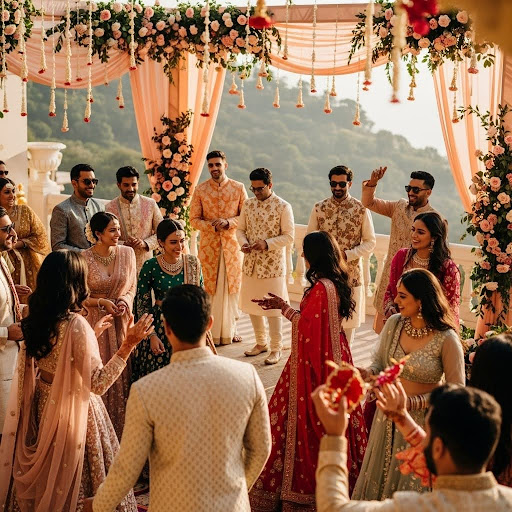
Day 3: The Wedding Ceremony — Tradition, Elevated
The wedding ceremony is the emotional core of the celebration. There is a quiet elegance to this day, a sense of heritage and ritual that reflects in how guests dress.
What Works:
Silk sarees with timeless weaves Classic lehengas with refined embroidery Anarkalis that elongate the silhouette
Color Sensibility:
Rich but respectful—ivory, gold, emerald, muted reds, soft pastels.
What to Avoid:
Wearing bridal red (unless culturally acceptable) Overly experimental silhouettes Anything too revealing for a traditional setting
A Stylist’s Insight:
This is not the moment to chase trends. It’s about honoring the occasion. The most impactful looks here are often the most understated ones—where fabric, fit, and grace take precedence over embellishment.
The Reception — A Return to Modern Elegance
If there is a reception, it often leans contemporary. The mood is polished, celebratory, and slightly more formal.
What Works:
Structured gowns Pre-draped or modern sarees Minimalist Indo-western ensembles
Styling Direction:
Clean lines, refined accessories, and a composed finish. This is where restraint feels luxurious.
The Unspoken Rules of Wedding Guest Dressing
Across all three days, certain principles remain constant:
1. Never Compete with the Bride
Avoid overly bridal colors, excessive layering, or statement pieces that draw unnecessary attention.
2. Understand the Setting
A beach wedding demands fluid fabrics and practical footwear. A palace wedding allows for more structure and opulence. Always dress in response to the environment.
3. Comfort is Visible
Discomfort shows—in posture, in movement, in expression. The best outfits are the ones you don’t have to think about once you’re wearing them.
4. Repetition is Acceptable—If Styled Differently
A saree can be draped differently. Jewelry can be restyled. Smart packing is about versatility, not volume.
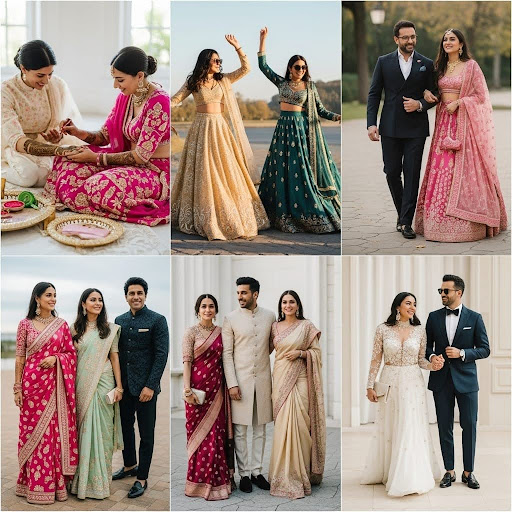
Packing with Intention, Not Excess
A destination wedding suitcase should feel edited. Plan complete looks in advance Stick to a cohesive color palette Carry versatile footwear Include functional essentials (fashion tape, safety pins, a steamer)
A Stylist’s Rule: If you can’t style it in at least two ways, reconsider packing it.
Common Styling Missteps
Dressing too heavily for daytime events Ignoring cultural cues or family traditions Prioritizing trend over personal comfort Carrying impractical footwear Over-accessorizing every look
Final Thoughts
A 3-day Indian destination wedding is not just a celebration—it’s a narrative. And your wardrobe becomes part of that story.
The most memorable guests are not the ones who wore the most elaborate outfits, but the ones who understood the moment—who dressed with awareness, ease, and quiet confidence.
Because in the end, true wedding guest style is not about being the most noticed person in the room. It's about belonging to the celebration in the most effortless way possible.
FAQs :
1. What should I avoid wearing as a guest to an Indian wedding?
Avoid overly bridal outfits, especially in red or heavily embellished styles, as well as anything too revealing or uncomfortable for long events.
2. How many outfits should I pack for a 3-day destination wedding?
Ideally 4–5 outfits—one for each major function—along with mix-and-match pieces to restyle if needed.
3. Can I wear western outfits to an Indian wedding?
Yes, especially for cocktail nights or receptions. Just ensure the look remains elegant and respectful of the occasion’s tone