

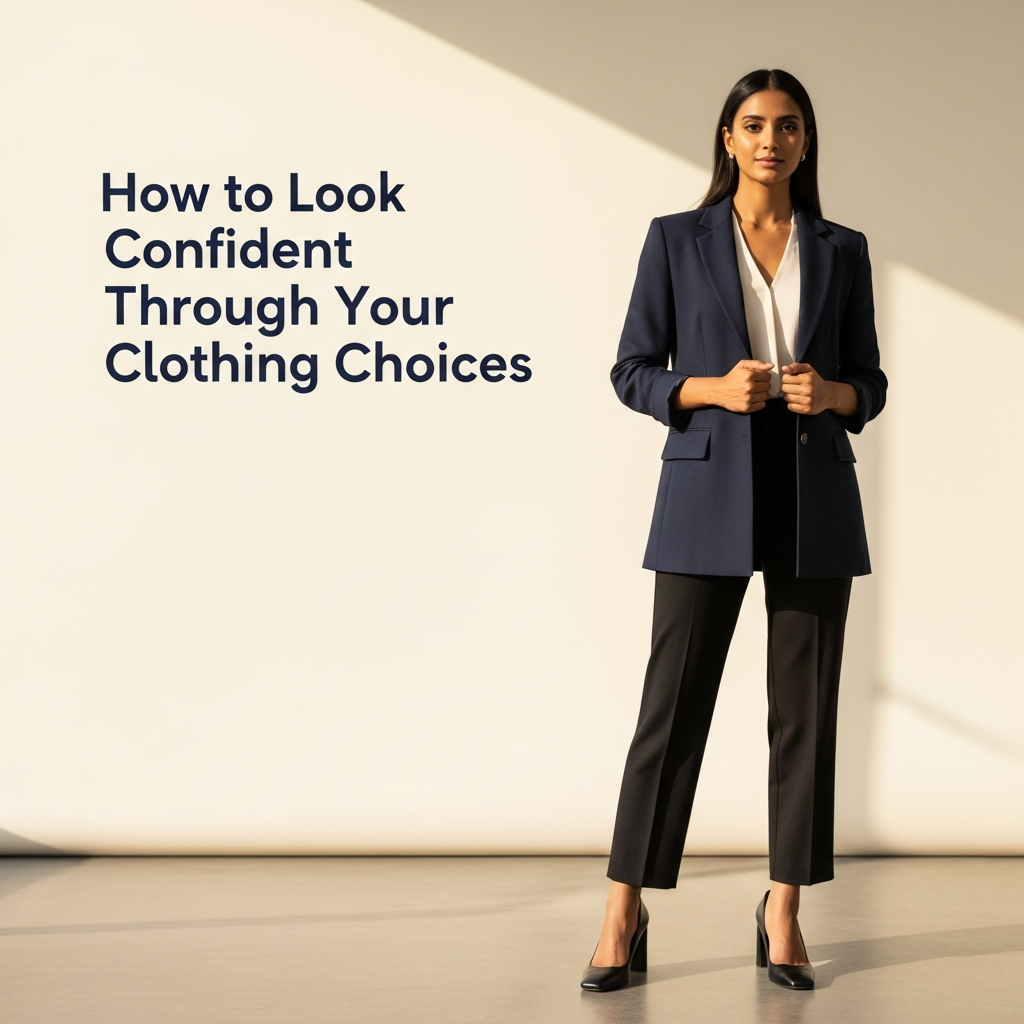
How to Look Confident Through Your Clothing Choices
Confidence is not just a feeling — it's a signal.
And before you've said a single word, your clothes are broadcasting that signal on your behalf. Every morning, the outfit you choose is making an argument about who you are, how seriously you take the situation, and how you expect to be treated.
The good news: you can edit that broadcast. Deliberately.
Most people assume that learning how to look confident requires expensive clothes, a perfect body, or some natural charisma they weren't born with. None of these are true. The ability to dress to look confident is a skill — built from specific, learnable outfit choices that work regardless of your budget, body type, or style history.
This post breaks down the science, the specific signals, the colours that project authority in Indian contexts, the mistakes that quietly undermine confidence through clothing, and a practical system for building what we call a Confidence Uniform.
THE PSYCHOLOGY BEHIND CLOTHING AND CONFIDENCE
There is a scientific term for the effect your clothes have on your mind and behaviour: enclothed cognition.
The concept, developed by researchers Adam and Galinsky, describes how what we wear affects both how we feel and how others perceive us — simultaneously. It is not just about external impression. The clothes you choose change your internal state. People who dress more formally in their own estimation consistently report higher confidence scores in professional situations. They think differently, act differently, and are perceived differently — all from the same clothes they already owned, worn more intentionally.
For Indian readers, this is important: enclothed cognition applies equally to ethnic and western wear. A well-pressed formal kurta worn with intention commands the same internal confidence boost as a blazer. The mechanism is intentionality — the feeling that you chose this outfit deliberately, that it represents something about who you are today. That is the standard, not formality.
Understanding this psychology is the foundation of learning how to feel confident in clothes — because confidence through clothing starts not in the mirror, but in the decision you make before you reach it.
THE 5 CLOTHING SIGNALS THAT COMMUNICATE CONFIDENCE
When someone walks into a room and immediately reads as confident, they are usually broadcasting five specific signals. None of them require expensive clothes.
1. FIT — THE FIRST SIGNAL
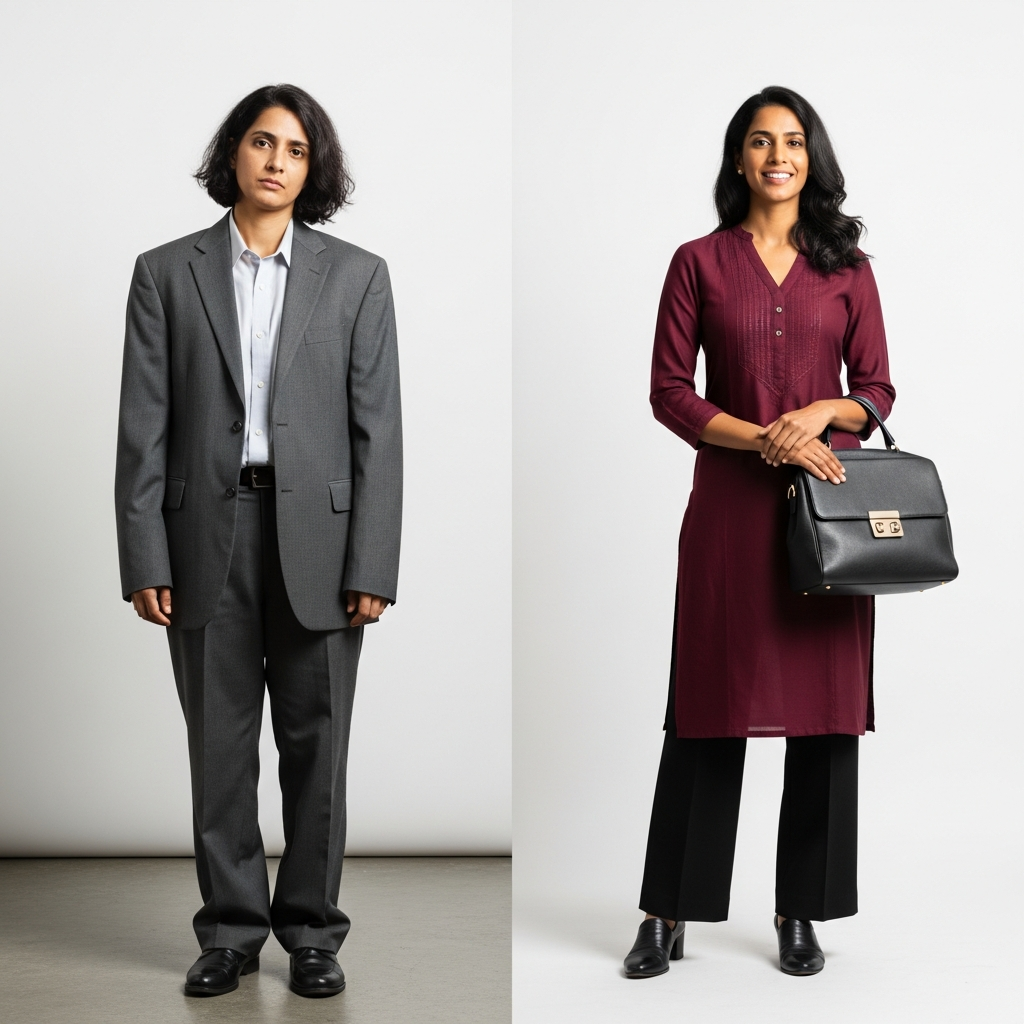
Clothes that fit well signal self-awareness. They communicate: "I know my body, I dress for it, I am not hiding." Ill-fitting clothes — whether too large or too tight — signal the opposite: either concealment or discomfort. Both undermine how to appear confident before you've spoken.
Fit check for the day: shoulder seam at the shoulder bone, no fabric pooling or pulling at the chest, trouser break clean at the shoe. A ₹300 tailor adjusting a ₹500 kurta creates more confidence signal than a ₹5,000 item that doesn't fit.
2. PRESSED AND CLEAN — THE EFFORT SIGNAL
Creased, worn, or visibly unironed clothes communicate one thing: you didn't prepare for this. Preparation is one of the clearest signals of taking a situation seriously — and it directly affects first impression confidence. Steam or iron every outfit before wearing it. This single habit separates people who look pulled-together from people who don't, regardless of what they're wearing.
3. COLOUR INTENTIONALITY — THE CONTROL SIGNAL
Wearing colours deliberately — not because they were the first thing you grabbed — signals control and self-possession. This doesn't require extensive colour knowledge. It requires the habit of asking: "Does this colour work for today's context?" before leaving. Random colour combinations read as unconsidered. Deliberate ones read as controlled.
4. GROOMING ALIGNMENT — THE COHERENCE SIGNAL
When your clothes and your grooming match in standard, the overall signal is coherent. A well-ironed formal shirt with unkempt hair creates dissonance — the brain registers inconsistency, which undermines the confidence signal. Body language and style work together: your appearance is a whole, not the sum of separate parts.
5. OCCASION-APPROPRIATENESS — THE SOCIAL INTELLIGENCE SIGNAL
Showing up dressed right for the context — not over, not under — signals social intelligence. It communicates: "I read the room before I walked in." This is one of the most powerful how to appear confident signals available, and it costs nothing beyond the habit of thinking about your context before choosing your outfit.
[INTERNAL LINK] Understanding how these five signals function in professional contexts — and how they affect the people around you before you've said a word — is covered in depth in our guide on first impressions in business:
COLOURS THAT PROJECT CONFIDENCE IN INDIAN CONTEXTS
Colour psychology is not universal — it is cultural, contextual, and, for Indian consumers, skin-tone specific. Here is how specific colours function as confidence signals in Indian professional and social contexts:
DEEP NAVY
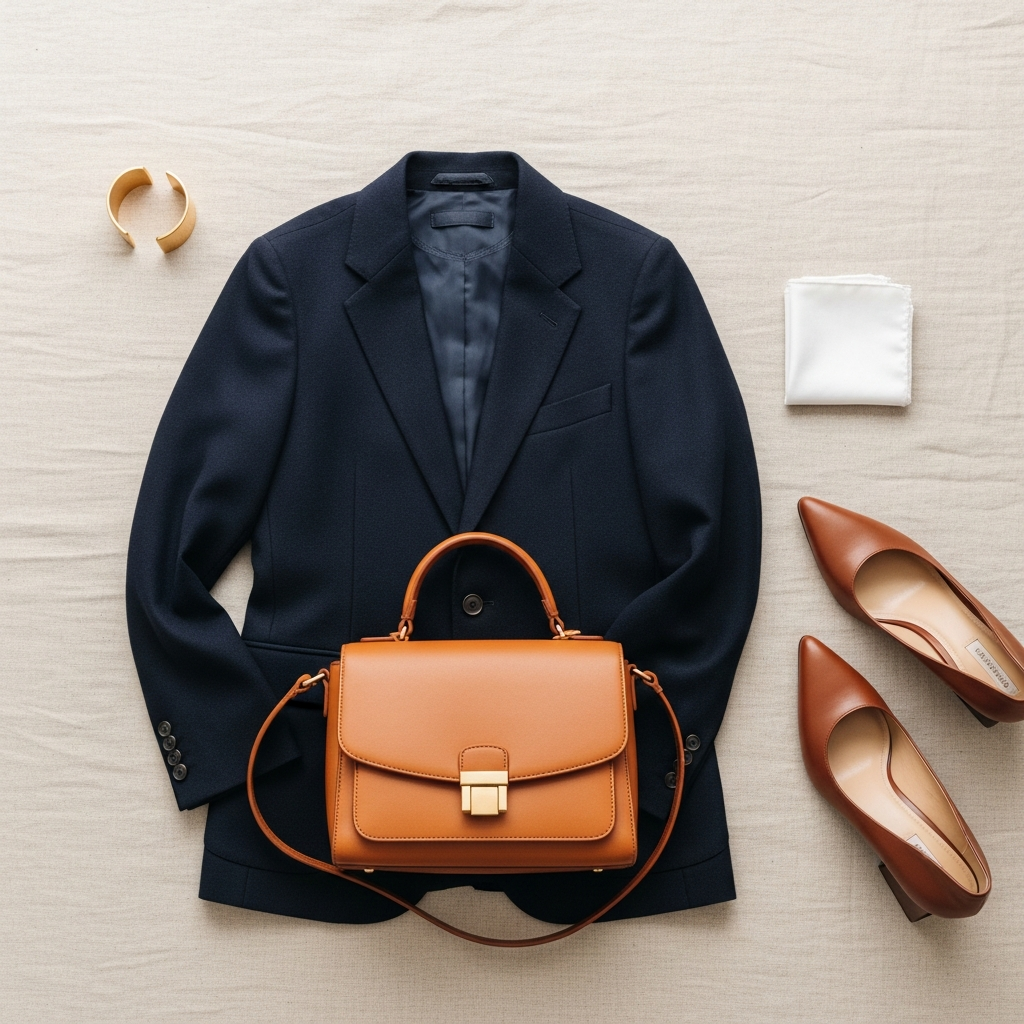
Authority without aggression. The most versatile confidence colour available — works across formal, smart casual, and ethnic contexts. Navy reads as controlled, competent, and trustworthy. A strong anchor for any look where you need to look confident at work.
BURGUNDY / WINE
Warmth with substance. Burgundy projects confidence without the harshness of black or the distance of navy. Particularly effective for Indian skin tones — the warm red undertone flatters a wide range of complexions and reads as both assured and approachable.
CHARCOAL GREY
Competence and reliability. The professional's neutral. Charcoal is the colour of quiet authority — it doesn't demand attention but it commands respect. Use charcoal as a base colour when the message you want to send is: "I know what I'm doing."
WHITE AND IVORY
Clarity and intention. Clean white or ivory signals precision and effort — because keeping white clean requires deliberate maintenance. In Indian professional contexts, an immaculate white kurta or formal shirt reads as disciplined and intentional.
BLACK
Authority and edge. Powerful in professional and social contexts where it is culturally appropriate. Use with awareness in traditional Indian settings where black is avoided at auspicious occasions.
FOR INDIAN SKIN TONES SPECIFICALLY
Jewel tones — deep forest green, royal blue, rich burgundy, deep plum — project confidence significantly better than pastels or washed-out tones. Pastels, while elegant, tend to recede visually. Jewel tones advance, communicate presence, and flatter the warm and neutral undertones most common in Indian skin.
What to avoid when the goal is how to look confident: pale grey, light beige, washed-out pink, and other muted pastels as the dominant colour. These tones communicate approachability — which is useful — but not authority.
THE CONFIDENCE-UNDERMINING OUTFIT MISTAKES
Every one of these reads clearly to others, even when the wearer is unaware of it.
CLOTHES THAT ARE VISIBLY TOO LARGE
Signal: you are hiding. Whether the cause is body insecurity, preference for comfort, or simply not noticing — oversized clothes communicate that the wearer does not want to take up space. This is the opposite of how to appear confident. The fix is not a smaller size — it is the right size, which is always the size where the garment sits without pooling, drooping, or concealing.
CLOTHES THAT ARE VISIBLY TOO TIGHT
Signal: you are uncomfortable. Visible strain at the buttons, fabric pulling across the chest or hips, restricted movement — these communicate physical discomfort, which translates directly into a loss of authority. Clothes that fit well allow free, confident movement.
CREASED OR WORN-LOOKING CLOTHES
Signal: disorganisation. Creases communicate that this outfit was not prioritised. In any context where how to improve self image matters, pressed clothes are non-negotiable. This is not about expensive clothes — a ₹800 linen kurta that has been steamed looks more confident than a ₹6,000 shirt that has been left crumpled.
MISMATCHED FORMALITY LEVELS
Signal: mixed messages. A formal blazer with casual track pants. A heavily embellished festive kurta with sports shoes. These combinations communicate that the wearer assembled their outfit without considering how the pieces read as a whole — which undermines the control and coherence signals.
OVERDRESSING TO COMPENSATE
Signal: insecurity. Wearing excessive jewellery, over-embellishment, or obvious brand signalling when it is not contextually appropriate communicates that the wearer is working to impress rather than simply being impressive. Confidence dresses appropriately for the context — it does not perform.
[INTERNAL LINK] The relationship between appearance, psychological state, and how others read you in professional environments is explored in our piece on the psychology of confidence and professional appearance: confidence through clothing and professional psychology)
BUILDING YOUR CONFIDENCE UNIFORM
The Confidence Uniform is a practical system for anchoring how to feel confident in clothes.
Here is how it works:
STEP 1 — IDENTIFY YOUR CONFIDENCE ANCHORS
Think back across the past six months. Which 2–3 outfits have generated the most positive feedback? In which outfits have you walked into a room and felt most like yourself — most clear-headed, most at ease, most ready? These are your confidence anchors. They already exist in your wardrobe.
STEP 2 — ANALYSE WHAT THEY HAVE IN COMMON
Look at those 2–3 outfits carefully. What colour family do they share? What silhouette? What level of formality? What fabric weight? The common elements are your personal confidence formula — the specific combination that consistently produces the signal you want.
STEP 3 — DEPLOY THEM STRATEGICALLY
Wear your confidence anchors for high-stakes situations: important meetings, job interviews, client presentations, first days. The outfit you already know works removes one variable from a high-pressure situation.
STEP 4 — BUILD OUTWARD FROM THE FORMULA
Once you have identified your confidence formula, every new wardrobe purchase can be assessed against it: does this item fit the colour family, silhouette, and formality level that consistently works for me? If yes, it is a likely integration. If no, it needs deliberate justification before it earns a place.
Over time, the confidence associated with your anchor outfits becomes transferable to new outfits built on the same principles. This is how to improve self image through clothing — not by buying more, but by understanding what already works and building intentionally from it.
QUICK CONFIDENCE BOOSTERS FOR ANY WARDROBE
You do not need a complete wardrobe overhaul to start projecting more confidence. These four additions or habits create an immediate shift:
• One item of quality jewellery or a structured watch. A single well-chosen accessory signals intentionality without effort. It communicates: "I thought about this." That signal is worth more than the cost of the piece.
• A well-maintained bag. The bag is the most frequently seen accessory in any professional context. A clean, structured bag in a quality neutral (tan, black, navy) instantly elevates the read of the entire outfit — regardless of what else is being worn.
• Polished, clean shoes. Shoes are the single most noticed grooming detail in professional settings — research consistently confirms this. Shoes in poor condition undermine every other effort. A clean, polished shoe elevates even a simple outfit.
• Posture alignment with outfit. A confident outfit worn with rounded shoulders, a hunched posture, or avoidant body language loses 50% of its impact. The outfit and the body language must be consistent — they are one signal, not two. Body language and style are inseparable.
HOW STYLEBUDDY CAN HELP
StyleBuddy's personal styling consultations include a confidence mapping session — a structured process of identifying the specific colours, silhouettes, and outfit formulas that consistently signal authority and self-assurance for your specific look, personality, and professional context.
We identify your existing confidence anchors, analyse what makes them work, and build a wardrobe plan around the formula. The result is not a generic style upgrade — it is a precise personal system for projecting exactly the confidence signal you want, in every context that matters.
[INTERNAL LINK] See how StyleBuddy's personal styling consultation works and what a confidence mapping session includes:
personal styling consultation — confidence and image
THE BOTTOM LINE
Knowing how to look confident through your clothing is not about looking like someone else — a celebrity, an influencer, or a version of yourself with a different wardrobe budget. It is about looking like the most intentional version of yourself. Deliberately. Every day.
The science is clear: the clothes you choose affect how you feel, how you think, and how others read you — before a single word is spoken. The five signals are learnable. The colours that project authority in Indian contexts are identifiable. The confidence-undermining mistakes are avoidable. And the Confidence Uniform is buildable from what you already own.
That is a learnable skill. And it starts with the outfit you choose tomorrow morning.
Ready to identify your confidence formula and build a wardrobe around it?
Book a free StyleBuddy style assessment
Our stylists will run a confidence mapping session and show you exactly what to wear — and why it works.