

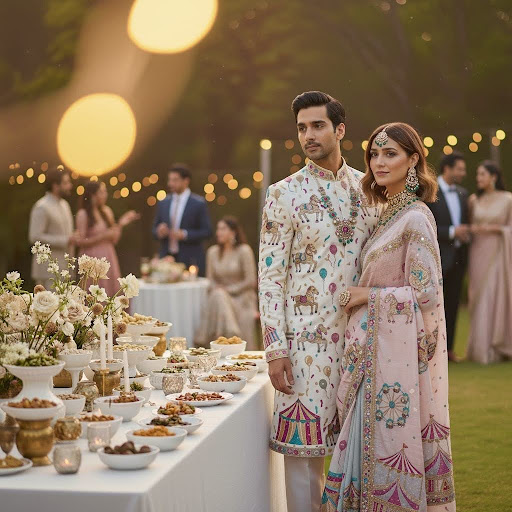
How to Coordinate Wedding Couple Looks Without Looking Matchy-Matchy
In today’s weddings, couple styling has evolved far beyond identical outfits and predictable color matching. The modern aesthetic is far more refined—coordinated, not copied.
As a stylist, I often remind couples: your outfits should look like they belong in the same story, not like they were cut from the same fabric. True coordination is subtle, intentional, and rooted in balance—where both individuals retain their identity while visually complementing each other.
This guide will help you master wedding couple coordination in a way that feels elevated, personal, and effortlessly stylish.
Why “Matchy-Matchy” No Longer Works
Gone are the days when couples wore identical shades or mirrored embroidery. While it may look coordinated at first glance, it often lacks depth and individuality in photographs.
The modern approach focuses on:
Visual harmony instead of duplication Complementary tones instead of identical colors Balance between both outfits, not competition
The result? A look that feels editorial, not staged.
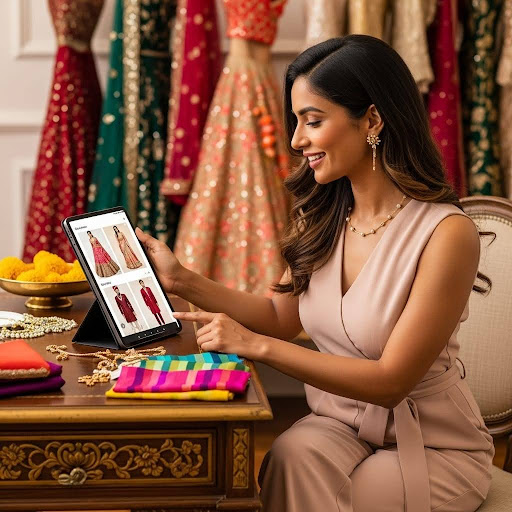
1. Start with a Shared Color Story
The easiest way to coordinate without matching is to work within a color palette, not a single color.
How to Do It:
Choose 2–3 complementary shade Let one partner wear the dominant color The other can pick a softer or contrasting tone within the same family
Example:
If the bride is wearing a deep maroon lehenga, the groom can opt for ivory, beige, or muted gold with subtle maroon accents.
Stylist’s Tip: Think in gradients and undertones—not exact matches.
2. Balance, Don’t Compete
One of the most common mistakes is both partners going equally heavy or equally minimal.
The Rule:
• If one outfit is heavily embellished, the other should be more restrained • If one silhouette is voluminous, the other should be structured and clean
Why it Works:
This creates visual balance and ensures neither look overwhelms the other.
3. Coordinate Through Details, Not Entire Outfits
Subtle elements often create the strongest connections.
Look for:
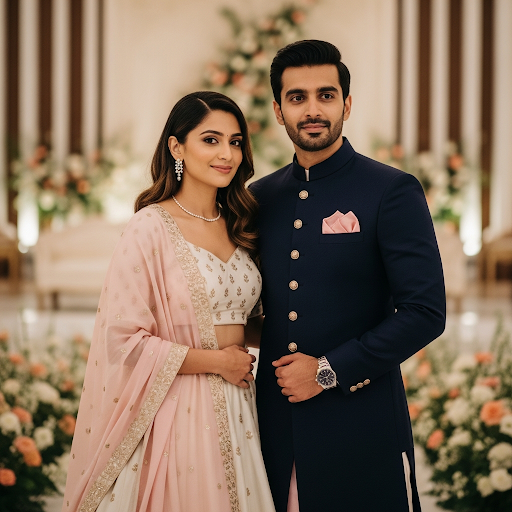
Dupatta or pocket square in a shared tone Embroidery motifs that echo each other Jewelry or accessories that tie into the partner’s outfit
Example:
A groom’s safa or stole picking up the bride’s outfit color instantly creates cohesion—without being obvious.
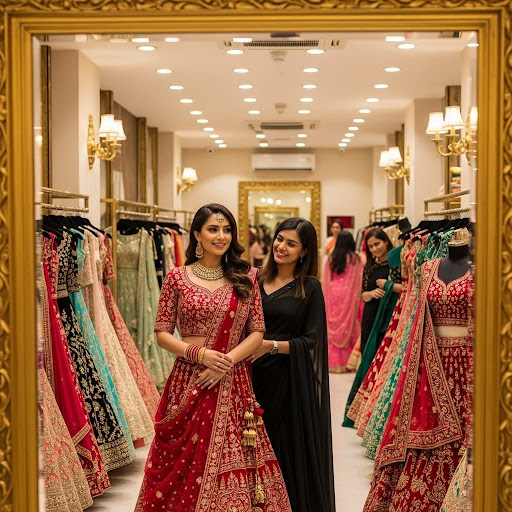
4. Align the Mood of the Outfits
Coordination is not just about color—it’s about energy.
Ask:
Is the event traditional, modern, or fusion? Are both outfits speaking the same design language?
Example:
If the bride is wearing a contemporary pre-draped saree, a heavily traditional sherwani may feel mismatched. Instead, a tailored bandhgala or Indo-western look would align better.
5. Play with Textures and Fabrics
Matching fabrics can look flat. Mixing textures adds depth.
Try: Silk with velvet Organza with brocade Matte fabrics with subtle sheen
Stylist’s Insight: Texture contrast photographs beautifully and adds dimension to couple styling.
6. Respect Individual Style Identities
Coordination should never come at the cost of individuality.
A minimalist bride shouldn’t feel pressured into heavy styling just to match
A groom with a classic aesthetic shouldn’t be pushed into overly experimental looks
The goal: Look like yourselves—just more refined and aligned.
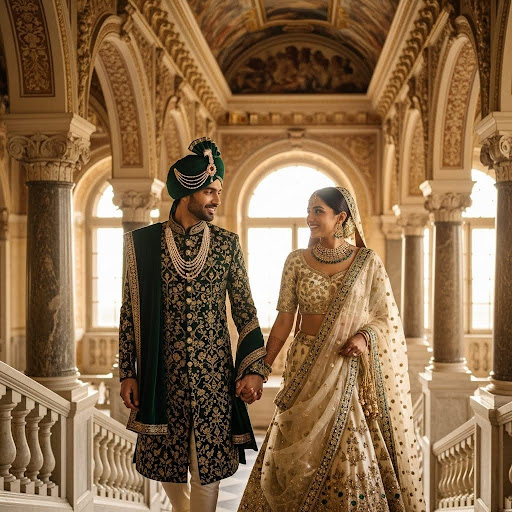
7. Consider the Venue & Setting
Your surroundings play a crucial role in how your outfits are perceived.
Examples:
Beach wedding → Soft, fluid fabrics, lighter tones Palace wedding → Rich textiles, deeper hues Day wedding → Pastels and breathable materials Night wedding → Jewel tones, structured silhouettes
When both outfits respond to the setting, coordination happens naturally.
- Plan Each Event as a Visual Story
For multi-event weddings, think beyond one look.
Strategy:
Create a cohesive palette across all events Avoid repeating the same pairing formula Let each function have its own aesthetic while maintaining overall harmony
Example:
Pastels for Mehendi, jewel tones for Sangeet, and classic neutrals for the wedding.
Common Mistakes to Avoid
•Wearing identical colors head-to-toe •Over-coordinating every single detail •Ignoring fabric and texture differences •Choosing outfits independently without discussion •Letting trends override personal comfort
A Stylist’s Final Word
The most beautifully styled couples are not the ones who match perfectly—they are the ones who align effortlessly. Their outfits speak to each other without trying too hard.
When done right, coordination feels natural, almost unnoticeable—yet incredibly impactful in photographs and in person.
Because at its core, wedding styling isn’t about looking identical— it’s about looking like you belong together, while still standing strong as individuals.
FAQs :
1. How can couples coordinate outfits without wearing the same color?
Choose complementary shades within the same color palette and connect the looks through subtle details like accessories, embroidery, or accents rather than identical outfits.
2. Should the bride and groom always match their outfits?
No, modern styling focuses on coordination, not matching. The aim is to create visual harmony while allowing both individuals to maintain their unique style.
3. What is the easiest way to coordinate couple outfits?
Start with a shared color story and decide who will wear the dominant shade. Then balance embellishments, silhouettes, and textures to create a cohesive look.