


How AI Wardrobe Tools Actually Work — And Why They're Not Replacing Your Stylist Yet
AI styling is real. It's here. And honestly — parts of it are genuinely impressive.
But here's the tension no one talks about: understanding exactly what AI wardrobe tools can do — and where they quietly fall apart — is the difference between a useful tool and a frustrating one.
The promise is seductive: upload your measurements, answer a few questions, and an algorithm builds your perfect wardrobe. For Western consumers with western wardrobes and western occasion codes, this gets reasonably close.
For Indian consumers navigating sarees, kurtas, dupattas, occasion dressing for functions, regional fabric traditions, and the social complexity of a joint family Diwali — the promise is still significantly incomplete.
This article breaks down exactly how AI styling tools work, where they add real value, where they fail Indian consumers specifically, and why the smartest approach is neither pure AI nor pure human — it's both.
Knowing what a tool can't do is just as important as knowing what it can. Read this before you trust an algorithm with your wardrobe.
What AI Wardrobe Tools Actually Do
Most AI styling tools work from three types of data input:
-
Body measurements or silhouette data: You enter measurements, upload a photo, or use AR to create a body model. The tool maps this to size recommendations and silhouette guidance.
-
Style preference quizzes: You answer questions about aesthetics, occasions, colours, and brands you gravitate toward. This trains the recommendation engine to your taste profile.
-
Wardrobe inventory uploads: Some tools let you photograph or log your existing wardrobe. The AI treats your current wardrobe as a dataset and generates outfit combinations from it.
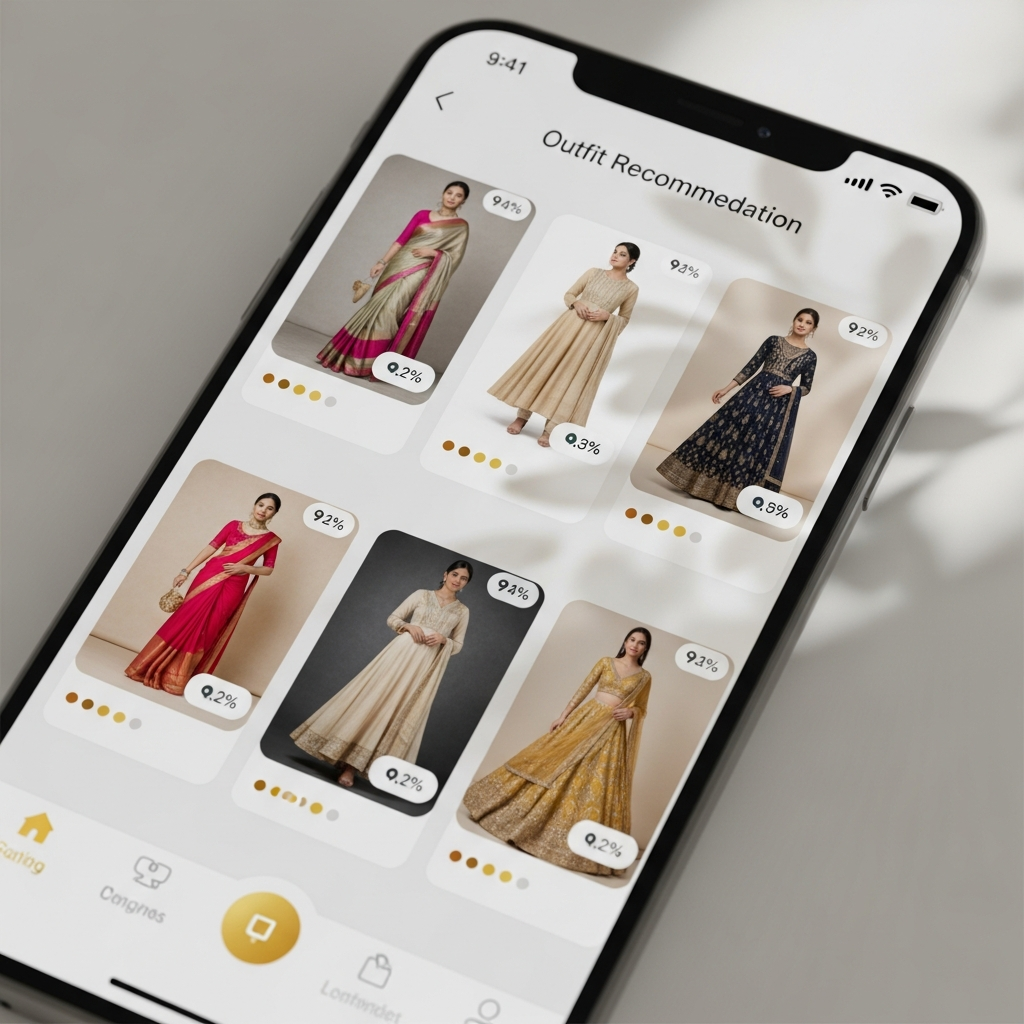
From these inputs, the output is typically outfit combination suggestions, shopping recommendations, and occasion-based outfit planning. More advanced tools use computer vision to 'read' wardrobes from photos — identifying item types, colours, and silhouettes without manual data entry.
For a specific application of AI in Indian styling contexts, our piece on how personal styling is changing bridal shopping in India explores how AI tools are being applied to wedding wardrobe planning — one of the most complex styling challenges Indian consumers face.
Where AI Styling Works Brilliantly
There are specific use cases where AI outperforms humans — and it's worth being clear-eyed about what they are.
Outfit Permutation Generation
This is where AI is genuinely superior. Given a wardrobe of 30 pieces, a human stylist will suggest 20–30 combinations in a session. An AI tool will identify 200+ permutations — systematically, without fatigue, and without aesthetic bias. If you want to know every possible way your existing wardrobe can be worn, AI is the right tool for this task.
Shopping Discovery and Personalisation
When trained on your purchase history, returns data, and browsing behaviour, AI recommendation engines are highly accurate at surfacing products you'll actually like. This is why fashion e-commerce platforms have invested so heavily in recommendation AI — it measurably increases conversion and reduces return rates.
Virtual Try-On and Return Reduction
Virtual try-on technology has matured significantly. Our complete guide to AI-powered try-on apps covers how these tools reduce return rates by giving consumers a more accurate preview of how garments look on their body — a problem that costs Indian e-commerce brands significantly every year.
Wardrobe Inventory Management
For people with large wardrobes who struggle to track what they own, AI-assisted cataloguing tools can scan, tag, and organise every item — creating a searchable, sortable wardrobe database. This alone can transform how efficiently a wardrobe is actually used.
Where AI Styling Fails Indian Consumers
This is the part the AI styling apps don't put in their marketing material.
Context Blindness
AI tools are fundamentally context-deaf. They cannot read the social dynamics of a room. They don't know that your mother-in-law will be at this function and that a particular neckline will cause a three-day conversation. They can't distinguish between a Diwali party in a South Delhi farmhouse and one in a Pune housing society — occasions that have genuinely different dress codes, even if both are technically 'festive.'
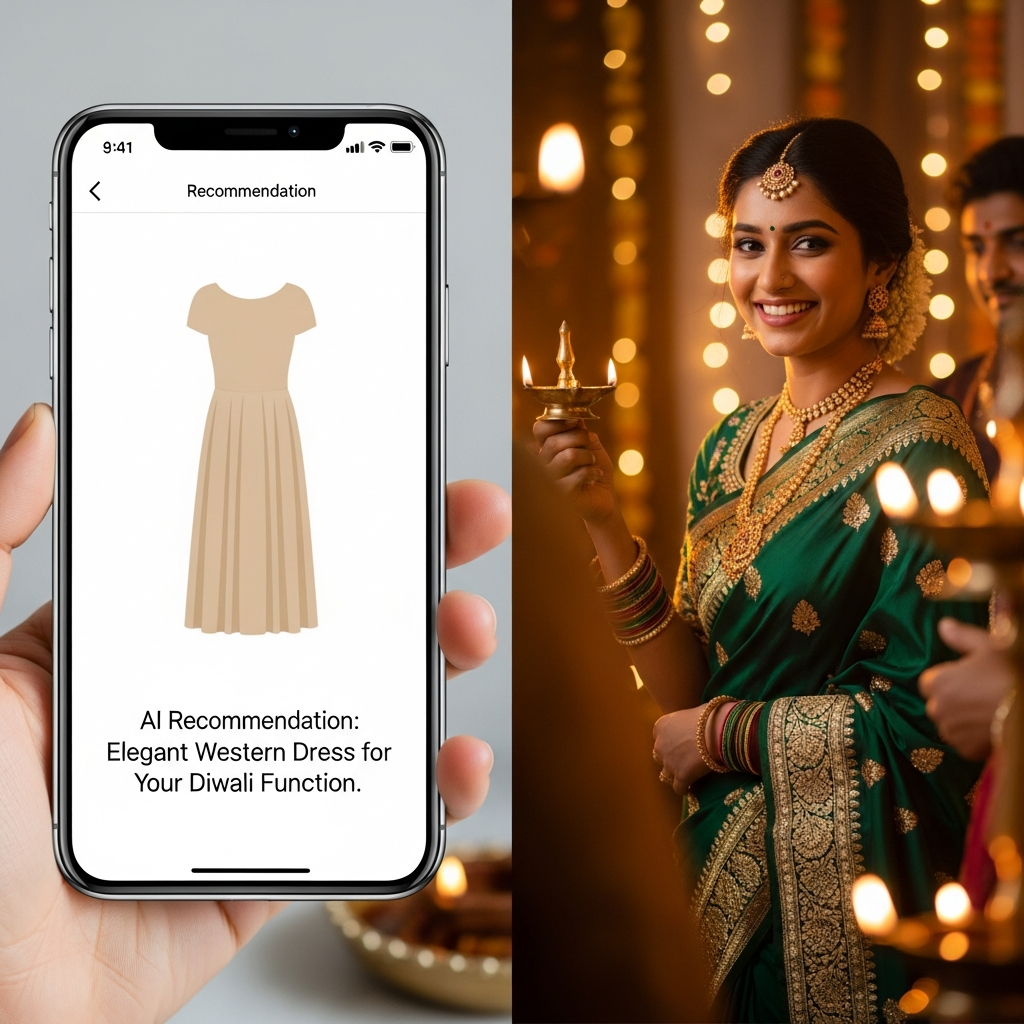
Indian dressing is deeply contextual in ways that Western dressing simply isn't. The same saree drape reads differently at a corporate Diwali party versus a temple visit. The same kurta that's perfect for a reception would be inappropriate at the haldi. AI has no framework for any of this.
Fabric Nuance and Textile Literacy
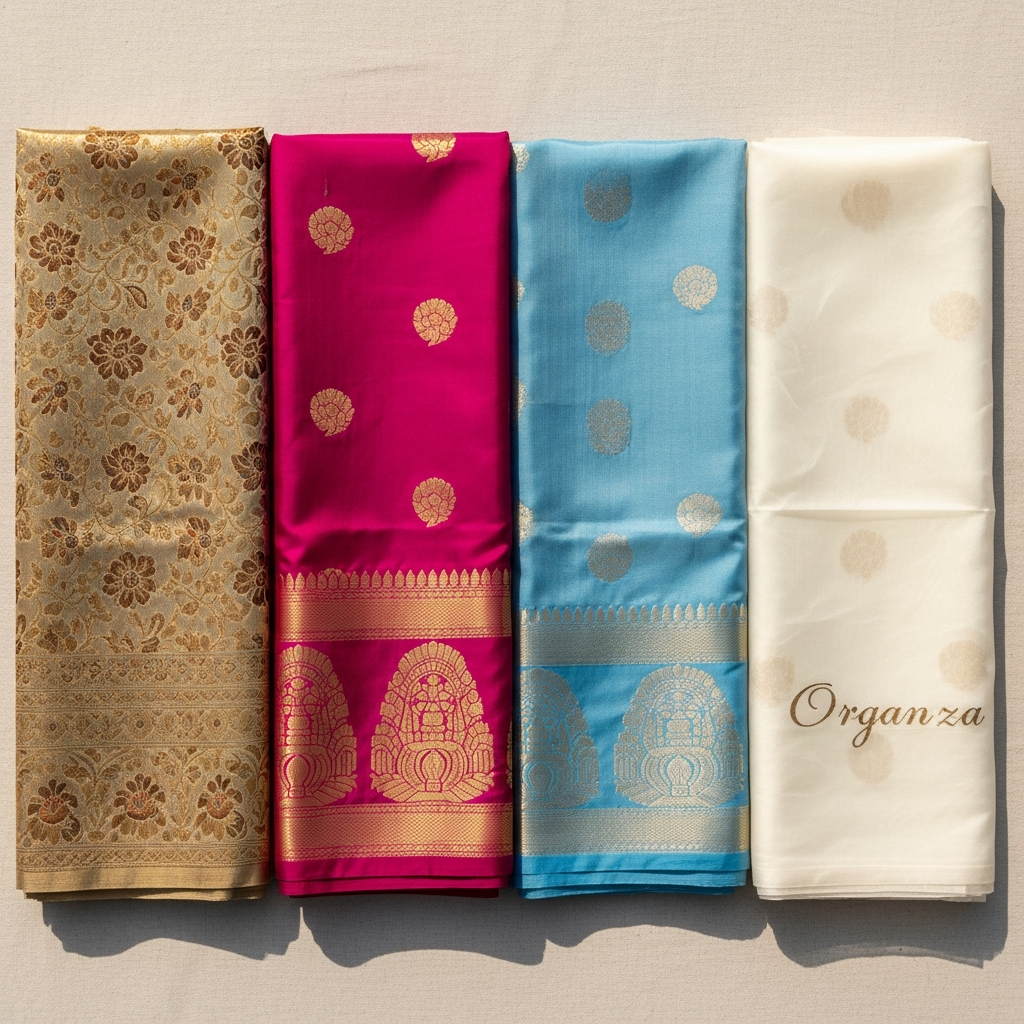
Most AI styling tools treat fabric as a secondary variable. For Indian consumers, fabric is often the primary decision. The difference between a Banarasi and a Kanjivaram is not just aesthetic — it carries cultural, regional, and occasion-specific significance that most AI systems are completely unequipped to parse.
Skin Tone Calibration for Indian Undertones
Colour recommendation AI is predominantly trained on Western datasets. The warm, cool, and neutral undertone spectrum in Indian skin has distinct characteristics that Western seasonal colour theory doesn't account for — and AI tools routinely generate colour palettes that are technically 'correct' by Western frameworks but visually wrong for Indian skin.
Ethnic Wear Architecture
The structural complexity of ethnic Indian dressing — saree draping variations, blouse construction, dupatta placement, kurta-trouser ratios — requires category-specific knowledge that current AI systems haven't been trained to handle with real depth. Most tools treat a saree as a single item. Any Indian woman knows it's a system of at least four decisions.
The Hybrid Model: Where AI and Human Stylists Work Together
The most effective approach isn't choosing between AI and human expertise — it's understanding what each does best.
-
AI handles: Wardrobe inventory management, outfit permutation generation, shopping discovery, virtual try-on, and pattern recognition across large datasets.
-
Human stylists handle: Occasion strategy, cultural context, social dynamics, fabric expertise, ethnic wear architecture, and the judgment calls no algorithm can replicate.
This hybrid model is worth understanding in depth. Our piece on personal stylist vs virtual stylist and how AI is being integrated into styling both explore how the two approaches are evolving and where they complement each other most effectively.
At StyleBuddy, this is exactly the model we operate on. Our technology layer handles wardrobe cataloguing and outfit combination generation. Our expert stylists — trained professionals with deep knowledge of Indian dressing contexts — validate every recommendation, add cultural intelligence, and make the judgment calls that actually matter.
The best AI in fashion doesn't replace human expertise. It amplifies it — by handling the data work so the human can focus on the decisions that require real intelligence.

5 Questions to Ask Any AI Styling App Before You Trust It
Not all AI styling tools are built equally. Before you rely on one, ask:
-
Is it trained on Indian body types and proportions? A tool trained exclusively on Western data will consistently miss for Indian bodies.
-
Can it handle ethnic wear with real depth? If the tool treats a saree as a single-variable item, it's not built for you.
-
Does it account for Indian occasion codes? Festive, functional, formal, and casual mean very different things in Indian cultural contexts.
-
Is there a human review layer? The best AI styling tools are validated by human experts, not run as pure algorithmic outputs.
-
How does it handle colour recommendations for Indian skin tones? Ask directly. The answer tells you whether the tool was built with Indian consumers in mind.
How StyleBuddy Approaches This
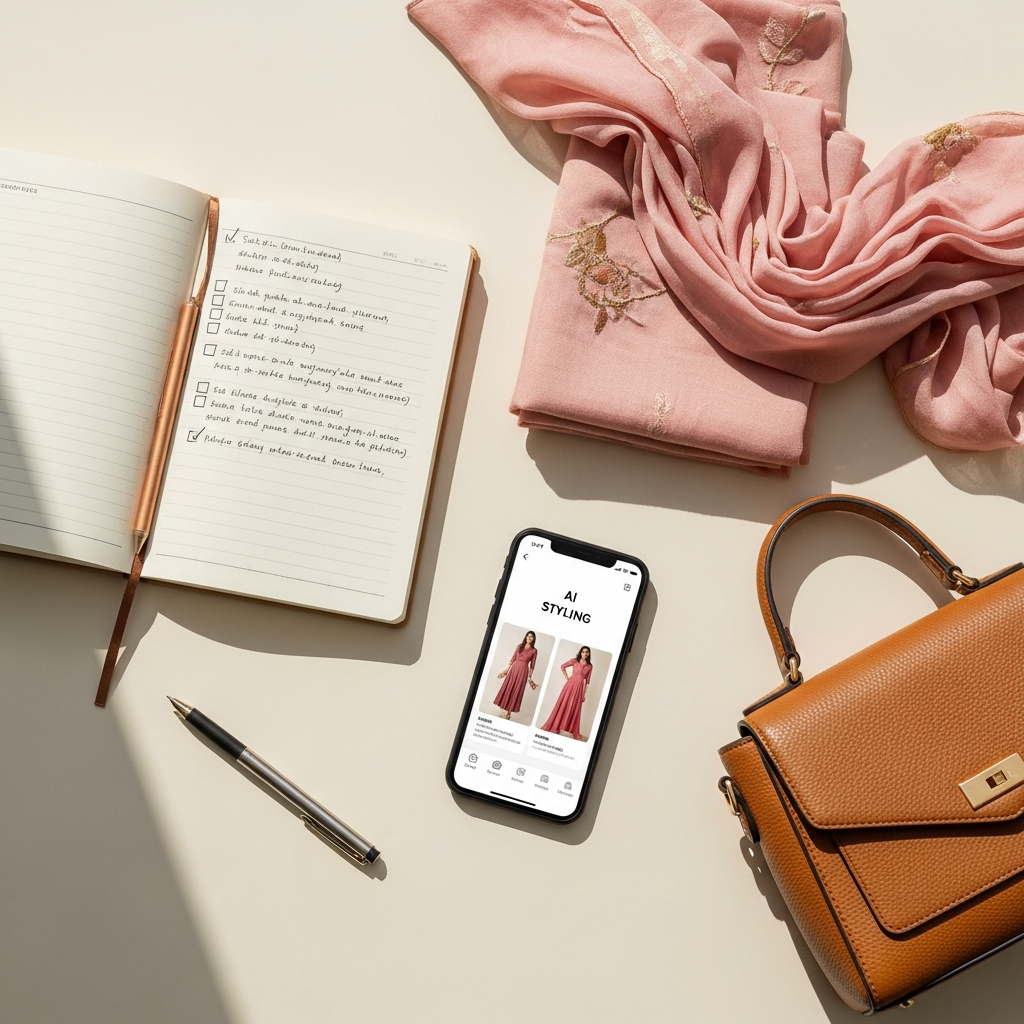
StyleBuddy's model was built from the start with the limitations of pure AI firmly in mind. We use AI-assisted wardrobe analysis for inventory cataloguing, outfit permutation mapping, and shopping list generation — the tasks where technology genuinely excels.
But every recommendation that goes to a client is reviewed and validated by a trained stylist who understands Indian dressing deeply. The cultural context, occasion mapping, fabric intelligence, and social nuance come from our people, not our algorithms.
The result: the speed and scale benefits of AI combined with the judgment and cultural fluency of a human expert. Neither alone gets you there. Together, they do.
The Bottom Line
AI wardrobe tools are genuinely useful. For outfit permutation generation, shopping discovery, and wardrobe inventory management, they outperform what any human can deliver manually. These are real capabilities worth using.
But for Indian consumers — navigating sarees and kurtas, Diwali dress codes and in-law dynamics, Banarasi versus Kanjivaram decisions and regional dressing traditions — AI alone is still significantly incomplete. The cultural intelligence, fabric expertise, and occasion judgment that Indian dressing demands are still firmly in human territory.
The future of styling is not AI replacing stylists. It's AI and stylists working together — each doing what they genuinely do best.
Want to experience what that hybrid model actually looks like? Book a free StyleBuddy virtual styling session — we'll show you how our technology and human expertise work together to build a wardrobe that actually fits your Indian life.