

Fashion Tips for Professionals in Delhi: The Complete NCR Office Style
Delhi's professional landscape is diverse — tech startups in Cyber Hub rubbing shoulders with corporate fortresses in Gurgaon, government offices in Central Delhi, finance firms in South Delhi. Each space has its own unspoken dress code, and understanding those codes is the difference between blending in and standing out.
This guide covers everything a Delhi professional needs to know: how to dress for your industry, how to make strong first impressions, how to navigate Delhi's climate and office environments, and how to build a professional image that opens doors.
Understanding Delhi's Professional Dress Code by Industry and Location
Delhi is not one professional culture — it is several, stacked on top of each other.
Corporate & Finance (Gurgaon, South Delhi, Connaught Place)
If you work in banking, consulting, or corporate offices around Gurgaon or South Delhi, the dress code is formal. Think tailored suits, structured blazers, and polished basics. This is where your appearance directly affects how clients and senior leadership perceive your competence.
The office temperature is aggressively air-conditioned — plan layering strategies. A light sweater, structured blazer, or shawl is not optional; it is essential.
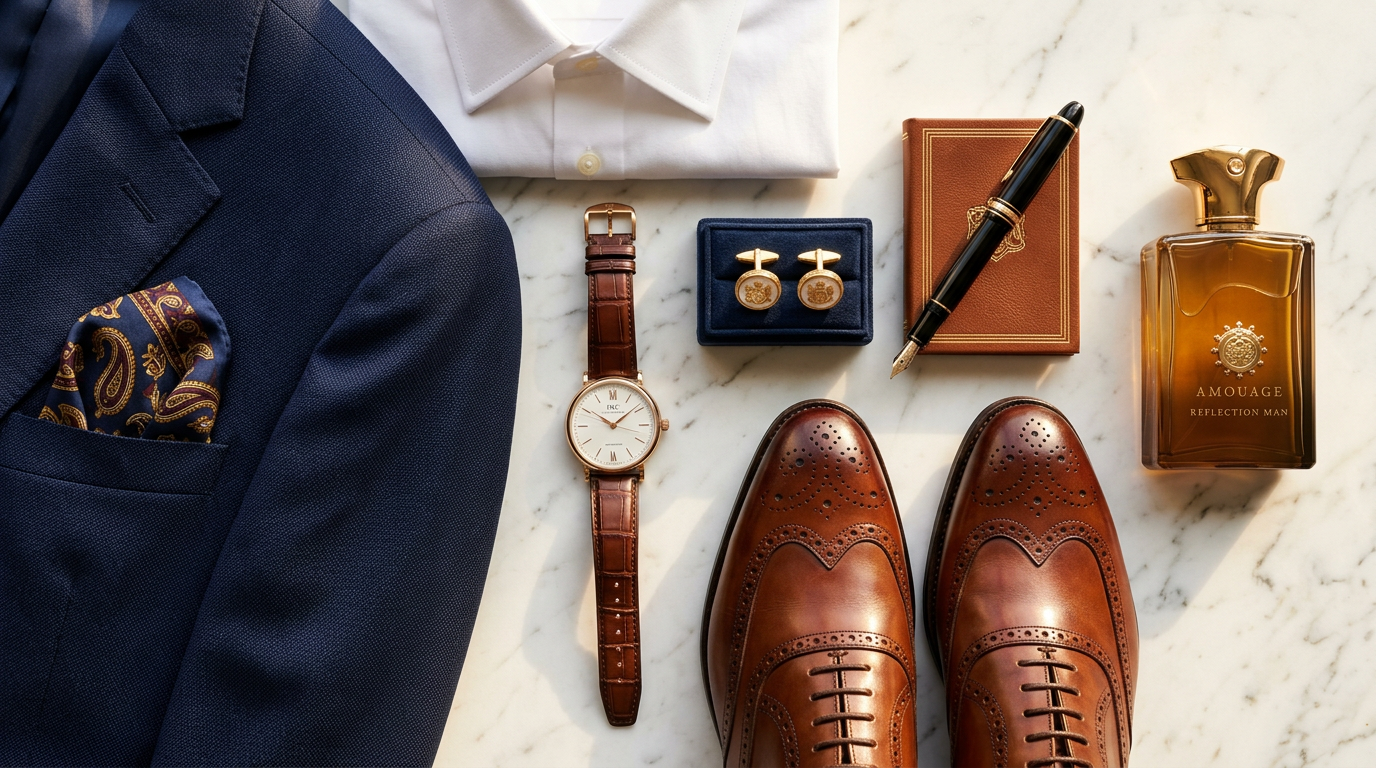
What works: Navy suits, white button-downs, tailored trousers, closed-toe heels or formal shoes, structured handbags. Jewellery should be minimal and intentional. For women, makeup should be polished but not dramatic.
What does not work: Anything loose, transparent, or casual. Visible tattoos, excessive jewellery, or anything that reads as "I just woke up."
Tech & Startups (Cyber Hub, Okhla, Gurugram)
Tech companies in Delhi have loosened dress codes significantly, but "casual" does not mean sloppy. The professionals who get promoted in tech are the ones who dress intentionally casual — clean basics, quality fabrics, polished shoes — not those who look like they grabbed whatever was on the floor.
The difference: a crisp linen shirt with tailored trousers is intentional casual. An oversized graphic tee with wrinkled jeans is sloppy casual. One projects confidence and control. The other signals you do not care about how you show up.
What works: Quality basics (Uniqlo, Zara, H&M), structured blazers for client meetings, clean sneakers, tailored trousers, minimal jewellery, groomed appearance.
What does not work: Ripped jeans, offensive graphic tees, worn-out shoes, visible stains, unmaintained hair or grooming.
Government & Administrative (Central Delhi, Secretariat)
Government offices operate on older formal protocols. Suits, ties for men, formal wear for women. Conservatism is the safe default. If you are unsure, dress more formally — no one gets in trouble for over-dressing in government offices.
What works:
Dark formal suits, long skirts or trousers, closed-toe shoes, minimal accessories, conservative colors, polished appearance.
What does not work: Trendy, casual, or anything that reads as disrespectful to protocol.
Making a Strong First Impression in Delhi Professional Settings
People form first impressions in seven seconds. In Delhi's competitive professional environment, those seven seconds determine whether someone sees you as capable, credible, and worthy of their time.
The Science: What Gets Evaluated in Those Seven Seconds
Research shows that people assess three things instantly:
1. Overall appearance. Are your clothes clean, pressed, and appropriate? Is your grooming maintained? Do you look like you belong in this room?
2. Confidence signals. How do you carry yourself? Do you make eye contact? Is your handshake firm? Are your shoulders relaxed or tense?
3. Intent signals. Do your clothes match the formality of the occasion? If you are interviewing at a corporate firm and you show up in startup casual, the signal is "I do not respect this culture enough to dress appropriately."
How to Dress for a Job Interview in Delhi
Job interviews are high-stakes first impressions. Here is what works:
For corporate interviews (banking, consulting, corporate firms):
Tailored suit, crisp white or light blue shirt, polished shoes, minimal jewellery, groomed hair and nails. Arrive looking like the most polished person in the room. You are not trying to impress with personality yet — you are trying to establish that you are professional enough to represent their company.
For tech interviews (startups, tech companies):
Quality casual that reads as intentional. Tailored trousers or dark jeans with a structured top, clean shoes, groomed appearance. You are matching the company culture while still looking competent.
For government interviews: Conservative formal wear. Suit if you have it. Long skirts/trousers. Closed-toe shoes. Dark colors. Minimal accessories.
The key in all three: you are not trying to be the most fashionable person in the room. You are trying to be the most trustworthy person in the room.
The Handshake and Eye Contact
Your handshake and eye contact matter more than you think. A firm grip, two to three seconds of contact, direct eye contact, slight smile. That is the non-verbal equivalent of "I am confident and I belong in this room."
A weak handshake or averted eye contact signals nervousness — even if your suit is perfect.
How Clothing Affects Confidence and Workplace Productivity
The relationship between what you wear and how you perform is not psychological — it is neurological.
The phenomenon is called enclothed cognition. When you wear clothes that align with how you want to be perceived, your brain shifts into a mode that supports that identity. Wear formal professional clothes and your brain activates higher-order thinking, attention, and executive function. Wear casual clothes and your brain is in a different mode.
In practical terms: when you know you look sharp, you participate more confidently in meetings. You speak with more conviction. You make bolder suggestions. You do not second-guess yourself.
Conversely, when you are unsure about how you look or worried that your appearance is undermining you, your mental energy goes to managing that anxiety instead of focusing on the work. That split attention costs you both performance and presence.
The evidence: Northwestern University researchers found that professionals in formal business attire performed 30% better on abstract thinking tasks compared to peers in casual clothing. A Harvard study found that women who invested in professional appearance reported 40% higher confidence in meetings and client interactions.
For Delhi professionals: dressing well is not about vanity. It is about allocating your mental energy toward work, not toward insecurity.
How to Improve Your Professional Appearance in Delhi
Professional appearance is not one thing — it is five things working together.
1. Grooming
Grooming is the foundation. Hair, skin, nails, and overall hygiene signal whether you take your role seriously.
In Delhi's heat and humidity, grooming is challenging. Your hair gets frizzy. Your makeup melts. Your clothes wilt. But that is exactly why consistent grooming matters — it signals that despite the climate, you maintain your standards.
For men: Hair trimmed every 3–4 weeks. Facial hair either clean-shaven or shaped intentionally — no accidental stubble or scraggly beards. Nails clean and trimmed. Daily skincare routine (at minimum: cleanser and moisturizer) to manage the heat and humidity.
For women: Hair managed intentionally — whether down and styled or up and neat, not a rushed frizz. Makeup that works in Delhi's heat — matte formulas, water-resistant products. Nails clean and well-maintained. Daily skincare with sunscreen (non-negotiable in Delhi's sun).
2. Wardrobe Basics That Work in Delhi's Climate
Delhi's professional wardrobe needs to account for extreme heat in summer and freezing AC indoors.
Summer (March-June):
Light fabrics (cotton, linen, blends). Layers — a light cardigan or blazer you can remove when the AC temperature becomes manageable. Light colors for tops, darker colors for bottoms (darker colors show less sweat). Breathable fabrics in shoes.
Winter (October-February): Layering is your strategy. Start with breathable base layers, add a structured blazer or sweater, add a coat if needed. Darker colors work well and hide wrinkles better.
Year-round:
Tailored fit, no wrinkles, colors that align with your skin tone, shoes that look intentional (not worn-out), fabrics that are high-quality (they drape better and maintain their appearance longer).
3. Fit and Tailoring
A ₹5,000 shirt that fits perfectly will always look better than a ₹15,000 designer shirt that pulls at the shoulders or hangs loose at the waist.
Delhi has excellent tailors (Diwan Saheb in Gurgaon, Brooks Brothers in Connaught Place for bespoke). Budget ₹1,000–₹2,000 per garment for tailoring. Shoulders should sit exactly at your shoulder bone. Sleeves should end at your wrist bone. Trousers should have a slight break at the ankle.
Well-tailored clothes transform how you look and feel.
4. Colour and Skin Tone Alignment
Wearing colours that complement your skin tone makes you look brighter, sharper, and more energetic. Wearing colours that clash with your skin tone makes you look tired — even if you slept eight hours.
A professional colour analysis identifies the specific shades that work for you. But even without formal analysis: if you consistently feel better in certain colours, trust that instinct. Build your professional wardrobe around those colours: Workwear Styling Service (https://stylebuddy.in/styling-services/workwear-styling).
5. Consistency and Intentionality
A professional image only works if it is consistent. A polished suit on client-facing days and wrinkled casuals on internal days signals that you only care about appearance when someone important is watching.
Build a wardrobe where every piece meets the same standard, so you look intentional every day — not just on days that matter.
Dressing Smart Every Day: The Practical Framework
Building a professional wardrobe that works in Delhi is straightforward:
Start with neutral basics: 3–4 tailored trousers in black, navy, grey. 4–5 tops (shirts, blouses, blazers) in white, cream, light blue. These are your foundation.
Add structure: 1–2 structured blazers that fit perfectly. Blazers are the fastest way to elevate casual into professional.
Add Delhi-specific layers: Light cardigans or wraps for AC management. A structured jacket for winter.
Add colour: Once the foundation is solid, add 2–3 pieces in colours that complement your skin tone. These add personality without sacrificing professionalism.
Add shoes: 2 pairs minimum. One formal (closed-toe heels, structured flats, or formal shoes). One that works with casual professionals (quality flats, minimal sneakers, structured shoes).
Aim for 15–20 pieces total that work together. This creates 30+ outfit combinations without requiring a closet full of clothes.
Navigating Delhi's Professional Settings: Location-Specific Guidance
Connaught Place & Central Delhi (Corporate, Finance, Government)
These areas are traditional and formal. Dress conservatively. If you are unsure, dress more formally — you will not regret it. Dark colours, structured silhouettes, polished accessories.
Shopping for CP professional wear: South Extension, Select Citywalk, luxury boutiques in Connaught Place itself. Brands: Zara, H&M, Marks & Spencer, Fabindia, local tailors.
Gurgaon & Cyber Hub (Tech, Startups, Corporate)
Dress code is more relaxed, but intention matters. Quality casual that signals competence. Dark colours, tailored fit, polished grooming.
Shopping: Cyber Hub, DLF Emporio, Palladium Gurgaon, Westend Mall. Brands: Uniqlo, Zara, H&M, Levi's, local labels.
South Delhi (Corporate, Finance, Professional Services)
Mix of formal and professional-casual. If unsure, lean formal. Polished appearance is expected.
Shopping: South Delhi boutiques, luxury malls, tailors in Safdarjung, Greater Kailash. Brands: designer boutiques, premium labels, bespoke tailoring.
Noida & East Delhi (IT, Corporate)
Professional-casual is standard. Intention and grooming matter more than formality.
Shopping: Noida malls (Logix, DND), online retailers (Myntra, Ajio, Amazon Fashion).
Workplace Dress Code Guide: When to Ask, When to Observe
Most companies have a dress code policy. Read it. If something is unclear, ask your HR team on day one — that is what they are there for.
If no policy exists, observe. Spend your first week watching how people dress in your role, in client-facing roles, and in leadership roles. That observation tells you the unspoken code.
General rule: Always dress one level more formally than what you observe. If everyone in your department wears business casual, you wear business professional. This gives you an advantage without looking out of place.
Building Professional Image in Delhi: The Long Game
Professional image is not a one-time project. It is an ongoing practice.
Your wardrobe needs seasonal updates. Your grooming routine evolves. Your body and style preferences change. The professionals who advance fastest are the ones who treat their image as seriously as they treat their work output.
Quick wins:
-
Invest in one structured blazer that fits perfectly. Wear it for a week. Notice how differently people respond to you.
-
Get your nails done and keep them maintained for one month. Track how you feel in meetings.
-
Identify one colour that consistently makes you feel confident, and wear it more often.
Long-term strategy:
-
Work with a stylist to understand your body type, colour palette, and style archetype. This foundational knowledge makes every future shopping decision easier: Image Consulting Service (https://stylebuddy.in/styling-services/image-consulting).
-
Build a wardrobe that works across seasons and settings. Refresh it seasonally but maintain consistency in quality and formality.
-
Treat grooming as non-negotiable. It is the first signal people read.
Frequently Asked Questions
How much should I spend on a professional wardrobe for Delhi?
Budget ₹25,000–₹50,000 for a solid professional wardrobe refresh. Tailoring adds ₹5,000–₹10,000 but makes everything look exponentially better. Most professionals overspend on quantity and underspend on quality. A capsule wardrobe of 10–12 well-fitted, versatile pieces will serve you better than a closet full of expensive but mismatched items.
Is the professional dress code changing in Delhi?
Yes and no. Corporate and government offices remain formal. Tech and startups have loosened codes. But "casual" does not mean sloppy. The professionals who advance in casual-dress companies are the ones who still look intentional and polished — just in quality basics instead of suits.
What is the biggest mistake Delhi professionals make with dressing?
Not accounting for the climate. Delhi's heat and AC extremes require strategic layering. Professionals who show up visibly sweating or freezing in inadequate clothing signal that they were not prepared — which undermines credibility. Plan your wardrobe around Delhi's weather.
How often should I refresh my professional wardrobe?
Seasonality is ideal. But if the budget is tight, update twice yearly (before summer and before winter). Replace worn items immediately. Add 2–3 new pieces each season that fit your evolving style and life.
Is it worth investing in professional styling help for Delhi?
If you are serious about career advancement and want to compress years of trial-and-error into a few sessions, yes. StyleBuddy's Delhi team has styled professionals across TCS, Infosys, Google, Deloitte, and startups. The investment pays for itself in faster promotions, higher confidence, and avoided wardrobe mistakes: Personal Stylist in Delhi (https://stylebuddy.in/cities/personal-stylist-in-delhi).
Book a Professional Styling Session in Delhi
If you want structured guidance on building a professional wardrobe tailored to Delhi's climate and your industry, StyleBuddy's Delhi team is ready to help.
Available services in Delhi:
-
Workwear styling consultations
-
Professional image consulting
-
Wardrobe makeovers
-
Personal shopping at South Delhi boutiques, Select Citywalk, DLF Emporio, Connaught Place
-
Job interview preparation
-
Confidence coaching for presentations and client meetings
Browse StyleBuddy's Delhi stylists and book a session: Personal Stylist in Delhi (https://stylebuddy.in/cities/personal-stylist-in-delhi)