

Corporate Grooming Training: A New Employee Development Strategy
Corporate Grooming Training: A New Employee Development Strategy
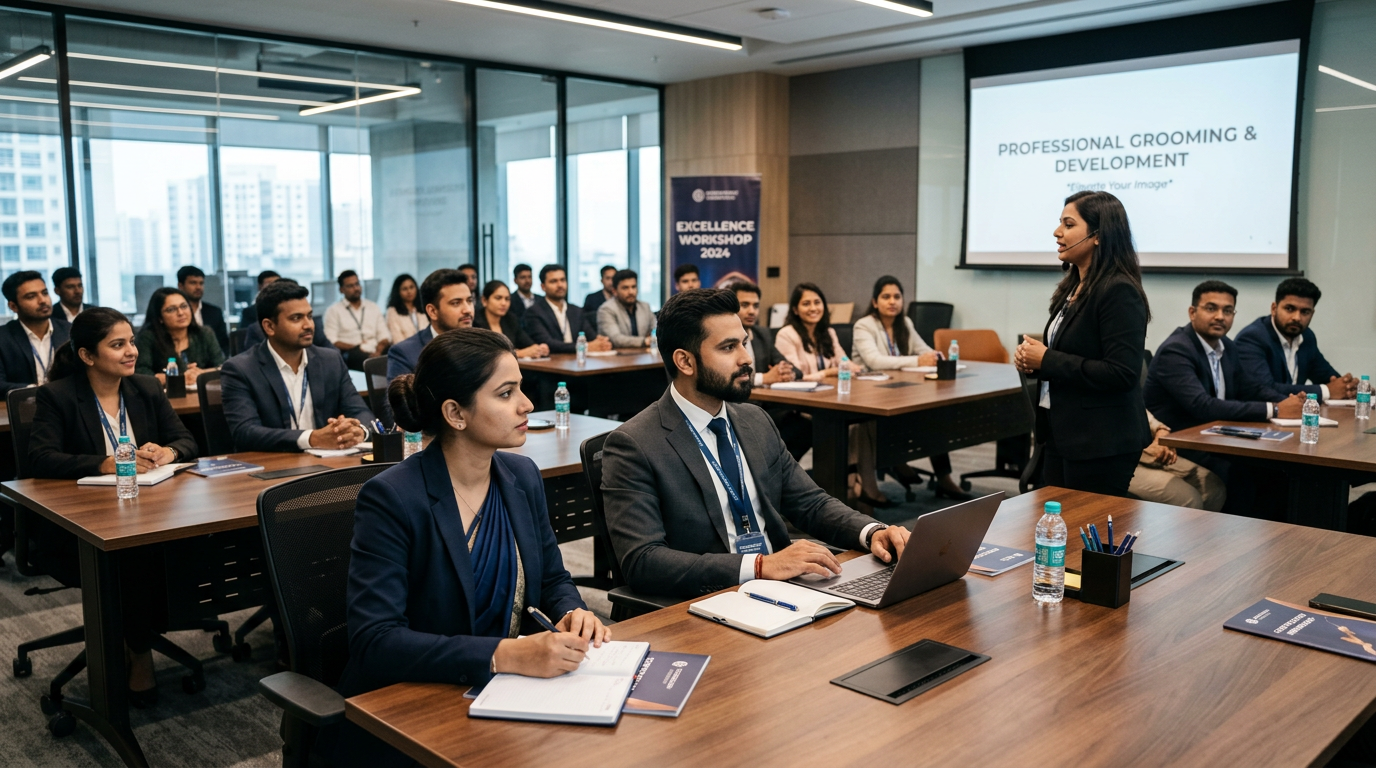
Employee development has traditionally focused on technical skills and leadership workshops. But a new dimension is emerging — grooming training. Organizations are discovering that how employees present themselves is as important as what they know.
The Evolution of Employee Development
- Technical skills training (1990s-2000s)
- Leadership and management (2000s-2010s)
- Soft skills and EQ (2010s-2020s)
- Holistic development including professional image (2020s onward)
What Corporate Grooming Training Covers
Appearance Management
Workwear styling, color analysis, seasonal wardrobe planning.
Personal Grooming
Skincare, hair care, fragrance etiquette, personal grooming best practices.
Professional Presence
Confidence building, body language, boardroom presence.
Professional Etiquette
Business etiquette, dining etiquette, cross-cultural norms.
Case Examples
Case 1: Pharmaceutical Company
A pharma major with 300+ medical reps partnered with StyleBuddy for a corporate grooming program. Doctor engagement scores up 24%, employee confidence improved 35%.
Case 2: Big 4 Consulting — Campus Hires
Grooming integrated into onboarding. Campus hires reported 40% higher readiness for client interactions. Manager feedback on professionalism improved 28%.
Case 3: Manufacturing Leadership Program
Image consulting module added to leadership development. Participants felt "significantly more leader-like." Board presentation ratings improved.
Designing an Effective Strategy
Step 1: Organizational Assessment
Start with a Corporate Style & Grooming Audit.
Step 2: Segmented Program Design
| Segment | Focus | Format | |---------|-------|--------| | New hires | Fundamentals | Group workshops | | Client-facing | Client-ready presentation | Intensive + follow-up | | Managers | Leadership presence | Small group + coaching | | Senior leaders | Executive image | One-on-one consulting |
Step 3: Integration with Existing L&D
Add grooming modules to leadership and sales training programs.
Step 4: Measurement Framework
Pre/post confidence assessments, manager-rated professionalism, client feedback, ROI calculation.
Step 5: Continuous Improvement
Seasonal updates, new hire integration, annual reassessment.
Addressing Stakeholder Concerns
- CFOs: 3-5x ROI within first year
- Employees: Frame as empowerment and career investment
- Managers: Provide tools for positive conversations about professional presentation
The Indian Context
- Regional diversity in professional norms
- Cultural celebrations with ethnic styling
- Climate considerations
- Economic sensitivity
- Generational differences
Conclusion
Corporate grooming training has evolved from nice-to-have to strategic investment. The key is treating it as a development strategy — structured, measured, and continuously improved.
Start your grooming development journey. Book a Corporate Audit.
Frequently Asked Questions
Is grooming training different from a dress code policy?
Yes. Dress codes tell employees what to wear. Grooming training teaches why presentation matters and how to make the best choices.
How do you customize for different departments?
Segment by role type — client-facing teams receive intensive training, internal teams focus on basics.
Can grooming training be part of performance reviews?
Yes, framed as a development area similar to communication skills.
How quickly do companies see results?
Noticeable improvements within 4-8 weeks, significant results by 3-6 months.